Sports
How Fast-Paced T20 Cricket Is Changing Training and Fitness for Young Players
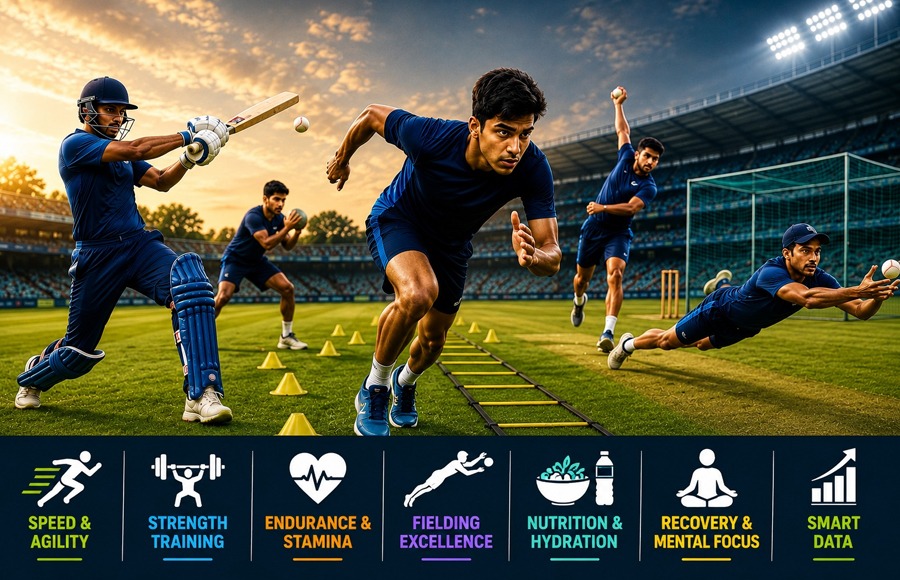

T20 cricket has revolutionized the game and what the game demands. Having only 20 overs per team, every ball bowled demands the utmost respect and every individual has to raise his performance at a very high degree even in the first ball of every innings, be it batting or bowling or fielding. Thus, required is powerful striking ability for the batters, rapid and accurate bowling ability by the bowlers, speed to cut the angle and agility by the fielders and effective recovery system.
This increased demand for quick fire performance is now forcing to rethink on training of young cricketers. Along with batting and bowling skills development, developing batsmen are expected to get stronger, faster, and agile, have endurance and mobility while being efficient in all recovery processes. In India, a significant role of T20 game and various private professional leagues, physical aspect plays vital part for developing cricketers.
Why T20 Demands a Different Kind of Fitness
Instead of longer periods, in a T20 type cricket there is more repeated explosive activity. A batsman might do quick runs between the wickets, then quickly increase for the next run, or may generate tremendous force behind the ball when hitting it. A fielder may find they have to run, slide, stop and throw in a few seconds, while the fast bowler may have to perform with speed in the run-up and the fast bowling, but it still needs a technically efficient action.
All these things mean young batsmen require strength, speed, hand-eye coordination, flexibility, agility, endurance and cardiovascular fitness combined. Research into young cricketers has also looked at short format playing styles and showed enhanced sprint speed, agility and power skills combined, with an emphasis on the requirement for controlled endurance.
Strength Training Is Becoming More Important
Power hitting has emerged as one of the key characteristic of the modern T20 game. So, players are expected to possess ample strength in the legs as well as in upper half of the body, which enables them to produce the power keeping body in balance.
Hence, these age specific strength and conditioning programmes are being incorporated into the younger cricketer’s practices. The exercises can be centred around the legs, core, shoulder region or a movement quality pattern.
However, junior training should not be an exact duplication of their seniors’ weights training. Being an athlete at the junior levels the programme needs to be designed based on age, experience, developmental level and personal needs of the individual. Now, the term young sportsperson seems to be more about building strong and competent athletes rather than just making them lift more weights.
Speed and Agility Have Become Essential
T20 offers rewards to those players who can travel at speed. Quick running between wickets is able to turn a single into a double and quick fielding able to save the Indians from conceding valuable runs. Training sessions therefore include short sprints, shuttle runs, change-of-direction movements, reactions, and a variety of agility drills.
The purpose is for the players to sprint fast, and to make good changes-of-direction when asked to change direction quickly.
Indian training camps have also included sprint based training, which is to increase running speed, whilst also including a competitive element into each drill. For young, talented developing cricketers, such skills are invaluable throughout competition cricket.
Fielding Has Become a Fitness Priority
The value and impact of fielding have greatly accelerated in T20 cricket, with an amazing catch, direct throw, or desperate stop capable of deciding the fate of the game. As a result, young players are now dedicating more time than ever to improving accuracy of throws, catching ability, mobility, acceleration and reaction speed.
Fielders should be prepared to take risks when it presents the possibility of turning over a boundary delivery; catching is to be performed as situations unfold, making fielders more prepared for game circumstances by implementing quick reactions from sprint and changes of direction into fielders’ technical drill and training sessions. Ultimately, a new era of cricketers is expected to be able to do everything possible to win games.
Fast Bowlers Need Specialized Preparation
Fast bowling makes heavy physiological demands on young athletes. Fast bowlers need strength and good levels of coordination to produce pace while maintaining a consistent action. Workload management thus becomes critically important.
In use at the BCCI Centre of excellence is the technology and athlete management systems which include measures of bowler workloads including their bowling workloads with the BCCI identifying work with fast bowlers on their preparation for such demanding workloads.
The application of such principles is extremely relevant to young individuals because too high a work increase in intensity, number of overs or in the training number can result in the development of injuries, while too little a level of preparation makes the individuals not prepared for competition requirements. A progressive individual approach to workload development may be of much greater benefit than merely using the number of overs to manage these loads.
Recovery Is Part of Training
This is not surprising, as such matches are very demanding on young players. Within a few days, a player may have played many matches or attended several practice sessions, so sleep, nutrition, drinking and rest are very important.
Once the body has recovered from the exertion of training, a player can enter the next day’s practice session or matches with energy, focus and better capabilities. A well-rested individual also experiences less stress both physically and mentally.
As the age of player is young, such types of systems develop the young players to understand and to inculcate into them the importance of recovery not as something we do only after training or after playing a match but as part of training itself for better performance .BCCI’s system for training of young players includes Sports Science, Sports Medicine, Strength and Conditioning scientists as a well-integrated unit to monitor the workloads on the players for proper recovery.

Nutrition for Young T20 Players
Training for fitness doesn’t offer complete returns without optimal nutrition. Your young cricketer needs enough fuel both for daily life and for all the activities on the field or the ground. The food you eat for training and for regaining your energy after exertion or competition consists of a balance between carbohydrates, protein, healthy fats, fruits, vegetables and plenty of fluids. Nutrition is specific for young people of all ages – youngsters shouldn’t imitate the diet of professional players without a proper guiding light. After all, young developing bodies have their own specific needs that are unlike adult ones.
Technology Is Changing Training
Technology is set to become a new piece of the modern cricket puzzle. It can offer coaches a detailed insight into player actions. The use of GPS, athlete-management software, video analysis and performance screening can deliver rich data about players.
In recent years, evidence suggests the Board of Cricket Control in India has utilized an Athlete Management system to track training sessions and GPS technology to track player’s workloads and actions throughout the player pathway.
This allows coaches working with younger cricketers to assess training volumes and determine any required changes. It will assist in the recognition of technical deficiencies.
Real-Life Example; India’s Emerging T20 Generation
The developing depth of India’s young T20 talent highlights the speed at which the format is evolving and young players breaking through to the national T20 scene like that of teenage prodigy Vaibhav Sooryavanshi. Just months ago in the July of 2026 he went on to be named Player of the Series in the 3-0 India vs Zimbabwe T20i series. VVS Laxman noted as well though that it is of paramount importance that he continued to develop himself physically. What his recent breakthrough signifies; that elite level of batting skill can carve itself a pathway into selections, as long as the process is continued through continued development at the professional level.
The Importance of Age-Appropriate Training
The greatest hurdle of course is the fact that you can’t train an adolescent player the way a fully-formed professional would be training. A carefully defined workload that respects growth, physical development, etc. Is needed.
The Ministry of Youth Affairs and Sports, of India has developed Fit India fitness protocols in two batches for kids aged 5-18 and teenagers up to 18 as well, stressing the need of fitness according to age. Hence focus for kids should be quality of movement, athletic qualities, technique and development, recovery and fun more than specializing too soon.
Conclusion
The demands of T20 cricket are increasingly shaping young cricketers’ bodies The modern day T20 game is driving young cricketers to evolve more into power generators, requiring quick and efficient players, those who possess pace, agility, and strong fielding skills along with muscle mass, coordination, and quick recovery. On the contrary, modern-day cricket development models are becoming more scientific too. Workload management, sport science, nutrition, strength and conditioning, video analysis and recovery are all playing a key role.
Young Indian cricketers’ aim should not be to get fit for the T20 format, but develop into athletes well-rounded to play all formats of cricket while sustaining injuries at bay throughout their respective careers. Given the balance of developing skills, age-appropriate strength and conditioning programs, scientific monitoring and recovery measures, the coming generation of young Indian cricketers is set to have the best in its class.
Tags
Related Posts




Health
Gut-Brain Connection: How Digestive Health Can Affect Mood and Everyday Wellbeing
Have you ever experienced a nervous stomach before an important meeting or…

Finance
Digital Gold vs Physical Gold: What Indian Investors Should Know Before Buying
Gold has always had a special place in Indian households. It can…

Business
Why Indian Businesses Are Rethinking Customer Loyalty in the Age of Quick Commerce
For years, customer loyalty in India was built around familiarity. You went…