Real Estate
Ready-to-Move vs Under-Construction Homes: Which One Makes More Sense?
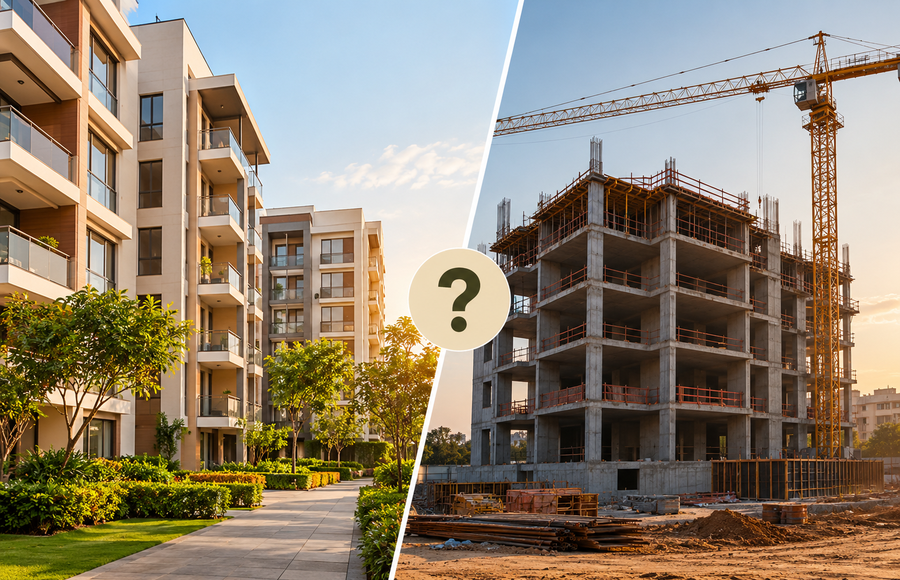

Buying a home is a significant financial decision, and choosing between a completed property and one still being built can be challenging. While ready-to-move homes offer immediate possession and greater certainty, under-construction properties may provide more flexibility in pricing, payment schedules and customisation. The right choice depends on your budget, financial commitments, lifestyle and long-term plans.
Understanding the differences can help you make a decision that suits both your present needs and future goals.
What Is the Difference Between Ready-to-Move and Under-Construction Homes?
A ready-to-move home is a completed property available for occupation, subject to the necessary approvals and documentation. Buyers can inspect the actual flat, assess its surroundings and plan their move without waiting for construction to finish.
An under-construction home is a property purchased before construction is complete. Depending on the project’s stage, buyers may need to wait months or years before taking possession. The final experience also depends on construction quality, project execution and timely delivery.
1. Price and Overall Affordability
Under-construction properties may have a lower initial purchase price than comparable completed homes in the same locality. Developers may also offer construction-linked payment plans, allowing buyers to pay in installments as the project progresses.
However, a lower quoted price does not automatically mean better value. Buyers should account for potential rent during construction, home-loan interest, maintenance charges and other applicable costs.
Ready-to-move properties may require a larger upfront commitment, but the total financial picture is easier to assess because the property already exists. Buyers can evaluate the condition, facilities and surrounding infrastructure before committing.
What makes more sense? Compare the complete acquisition cost rather than the advertised price alone.
2. Possession and Construction Risks
For buyers who need a home immediately, ready-to-move properties offer a clear advantage. You can plan your relocation, avoid prolonged uncertainty and potentially eliminate the need to pay rent alongside pre-possession loan installments.
Under-construction homes carry the risk of construction delays, which can disrupt financial planning and personal arrangements. Although India’s Real Estate (Regulation and Development) Act, 2016 (RERA) provides important buyer protections, it does not eliminate every project-related risk. Eligible buyers may have remedies if a developer fails to deliver possession as agreed.
Before booking, verify the project’s registration with the relevant state RERA authority, approved plans, construction progress and declared possession date.
3. GST and Home-Loan Considerations
Tax treatment is another important difference. In India, GST generally does not apply to the sale of a completed residential property where the entire consideration is received after the required completion certificate or first occupation, whichever is earlier. Under-construction residential properties can attract GST, subject to applicable rules and exceptions.
Home-loan costs also deserve attention. Buyers of under-construction properties may incur interest payments before possession, depending on their loan structure and disbursement schedule. Eligible pre-construction interest can be claimed in five equal annual instalments beginning in the year of acquisition or completion, subject to applicable income-tax provisions.
Tax rules and eligibility can change, so confirm the current treatment with a qualified tax professional before making a decision.
4. Property Quality, Amenities and Investment Potential
A completed property lets you inspect the actual layout, ventilation, natural light, construction finish and available amenities. You can also assess traffic, noise levels, connectivity and neighbourhood development rather than relying entirely on project brochures.
With an under-construction home, buyers may have more choice in floor plans, floors or units, depending on availability. There may also be scope for appreciation as the locality develops, but neither future price growth nor investment returns are guaranteed.
For either option, examine the builder’s track record, legal title, location, connectivity and resale demand. An attractive launch price is not a substitute for thorough due diligence.
Ready-to-Move vs Under-Construction Homes: Which Should You Choose?
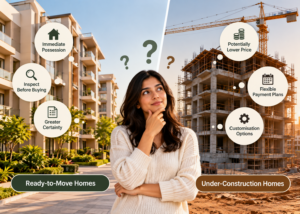
The better option depends on your circumstances:
- Choose a ready-to-move home if you need immediate possession, prefer certainty and want to inspect the finished property before buying.
- Choose an under-construction home if your move is flexible, you can manage the waiting period and the project’s pricing and payment structure suit your finances.
Before deciding, compare the total cost, likely possession date, ongoing rent, loan commitments and relevant approvals. A registered project and a reputable developer are important considerations, but neither removes the need for independent checks.
Conclusion
Choosing between ready-to-move and under-construction homes ultimately depends on your budget, timeline and financial priorities. While ready-to-move properties offer immediate possession and greater certainty, under-construction homes may provide flexible payment options and potential long-term value. Before making a decision, compare the total cost, verify legal approvals and assess the developer’s track record. The right home is not simply the one with the lower price, but the one that best fits your needs and financial goals.
Explore available properties, compare your options and make an informed decision before taking the next step towards homeownership.
Tags
Related Posts




Finance
SIP vs Lump Sum: How Do These Two Investment Approaches Differ?
Investing is not just about choosing the right mutual fund. It is…

Health
Screen Time and Your Eyes: What Long Hours on Devices Can Really Do to Your Eyes
From checking emails and attending online meetings to scrolling through social media,…

Sports
How Sports Leagues Are Creating New Career Opportunities Beyond Athletes
Sports leagues are no longer defined solely by the athletes competing on…