Sports
How Sports Leagues Are Creating New Career Opportunities Beyond Athletes


Sports leagues are no longer defined solely by the athletes competing on the field. Behind every successful tournament is a network of professionals managing sponsorships, analysing performance, producing digital content, organising events and building relationships with fans. As professional sports become increasingly organised and commercially driven, career opportunities in sports are expanding beyond traditional roles such as coaching and playing.
From cricket leagues in India to international football competitions, sports organisations need people with expertise in business, technology, communication and management. This shift is creating new pathways for graduates, professionals and sports enthusiasts who want to build careers in the industry without becoming athletes themselves.
The Growing Business Behind Sports Leagues
Modern sports leagues operate as complex businesses. They generate revenue through broadcasting rights, sponsorships, ticket sales, merchandise and digital platforms. Delivering these commercial activities requires specialists across multiple departments.
The International Federation of Association Football (FIFA), for instance, recruits professionals in areas ranging from tournament organisation and governance to commercial management. Its career opportunities demonstrate how a global sporting organisation depends on expertise beyond the pitch.
In India, the expansion of organised competitions, including franchise-based cricket and football leagues, has strengthened the need for professionals who can manage teams, engage audiences and deliver large-scale sporting events.
6 Career Opportunities in Sports Beyond Playing
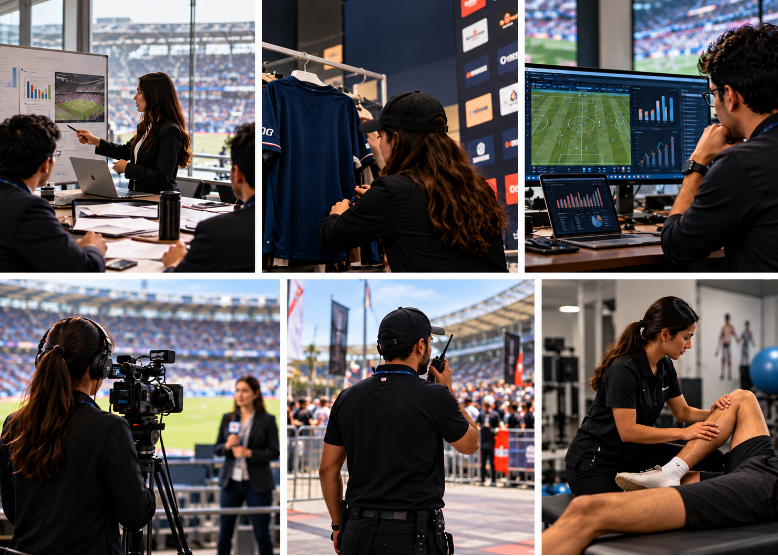
1. Sports Management and Administration
Sports managers coordinate the operational and commercial activities of teams, leagues and sporting organisations. Their responsibilities may include budgeting, scheduling, recruitment coordination, logistics and stakeholder management.
Professionals in this field can work with franchise teams, sports federations, event organisers and sports management agencies. Strong organisational skills, commercial awareness and an understanding of the sporting ecosystem are particularly valuable.
2. Sports Marketing and Sponsorship Management
Brands invest in sports to reach engaged audiences and build long-term associations with teams, players and competitions. Sports marketing professionals develop campaigns, manage partnerships and measure sponsorship performance.
Their work may involve negotiating brand collaborations, planning promotional activities, coordinating advertising campaigns and ensuring that sponsors receive the visibility promised in partnership agreements.
As a result, experience in digital marketing, public relations, brand strategy and client servicing can be highly relevant to this career path.
3. Sports Analytics and Performance Analysis
Data is increasingly important in understanding sporting performance and making strategic decisions. Analysts examine player statistics, match footage, tactical patterns and fitness indicators to help coaches and teams evaluate performance.
Sports analytics also extends beyond the field. League organisers can use audience and ticketing data to understand fan behaviour, while commercial teams analyse campaign performance and sponsorship returns.
A background in statistics, mathematics, economics or data analytics can provide a useful foundation. Familiarity with Excel, visualisation tools and statistical software can strengthen an applicant’s profile.
4. Sports Journalism and Digital Content Creation
Fans expect more than match results. They follow interviews, behind-the-scenes footage, player stories, tactical explainers and real-time updates across websites and social media.
This creates opportunities for sports journalists, video editors, photographers, social media managers, copywriters and digital producers. These professionals help leagues maintain audience interest before, during and after competitions.
Strong storytelling, research, video production and platform-specific content skills can help aspiring professionals enter this field.
5. Event Management and Operations
Every match involves detailed coordination, from venue preparation and ticketing to security, transport, accreditation and spectator services. Event professionals ensure that these activities run efficiently and that audiences have a safe, organised experience.
Experience in hospitality, logistics, project coordination and vendor management can be useful for people pursuing roles in sporting events.
6. Sports Science and Athlete Support
Athletes rely on multidisciplinary teams to maintain fitness, recover from injuries and perform consistently. Physiotherapists, sports psychologists, nutritionists, strength and conditioning specialists and medical professionals contribute to athlete welfare and development.
These roles generally require relevant specialist qualifications, clinical training or professional accreditation, depending on the position.
How to Build a Career in the Sports Industry
Entering the sports industry requires a combination of relevant skills, practical experience and professional networking. A useful starting point is to identify a specific career path rather than pursuing sports as a broad, undefined interest.
Aspiring professionals can build their profiles by:
- Choosing relevant training: Explore sports management, marketing, analytics, journalism or sports science courses aligned with the desired role.
- Gaining practical experience: Seek internships with leagues, clubs, federations, agencies or event organisers.
- Building a portfolio: Showcase campaign plans, match analyses, content samples or event projects that demonstrate practical ability.
- Following official opportunities: Monitor organisations such as FIFA and the Sports Authority of India for recruitment notices, internships and relevant openings.
Conclusion
Sports leagues are creating opportunities for people with diverse professional backgrounds, proving that a career in sports does not depend on athletic ability alone. Business expertise, creative thinking, analytical skills and operational experience all contribute to the success of modern sporting competitions.
For aspiring professionals, the next step is to match existing strengths with a suitable role, develop industry-specific skills and gain practical experience. Explore the wider sports ecosystem, identify emerging opportunities and start building a career behind the game.
Tags
Related Posts




Travel
How Railway Journeys Are Becoming Part of the Travel Experience Again
There was a time when a train journey was simply a way…

Business
The Subscription Economy: Why We’re Paying Monthly for Everything
Remember when buying something meant paying for it once and using it…

Real Estate
What Is a Pre-Launch Property? Things Buyers Should Know Before Investing
Imagine finding a property at a price lower than what the developer…