Sports
The Rise of Women’s Sports in India: From Participation to Prime-Time Audiences
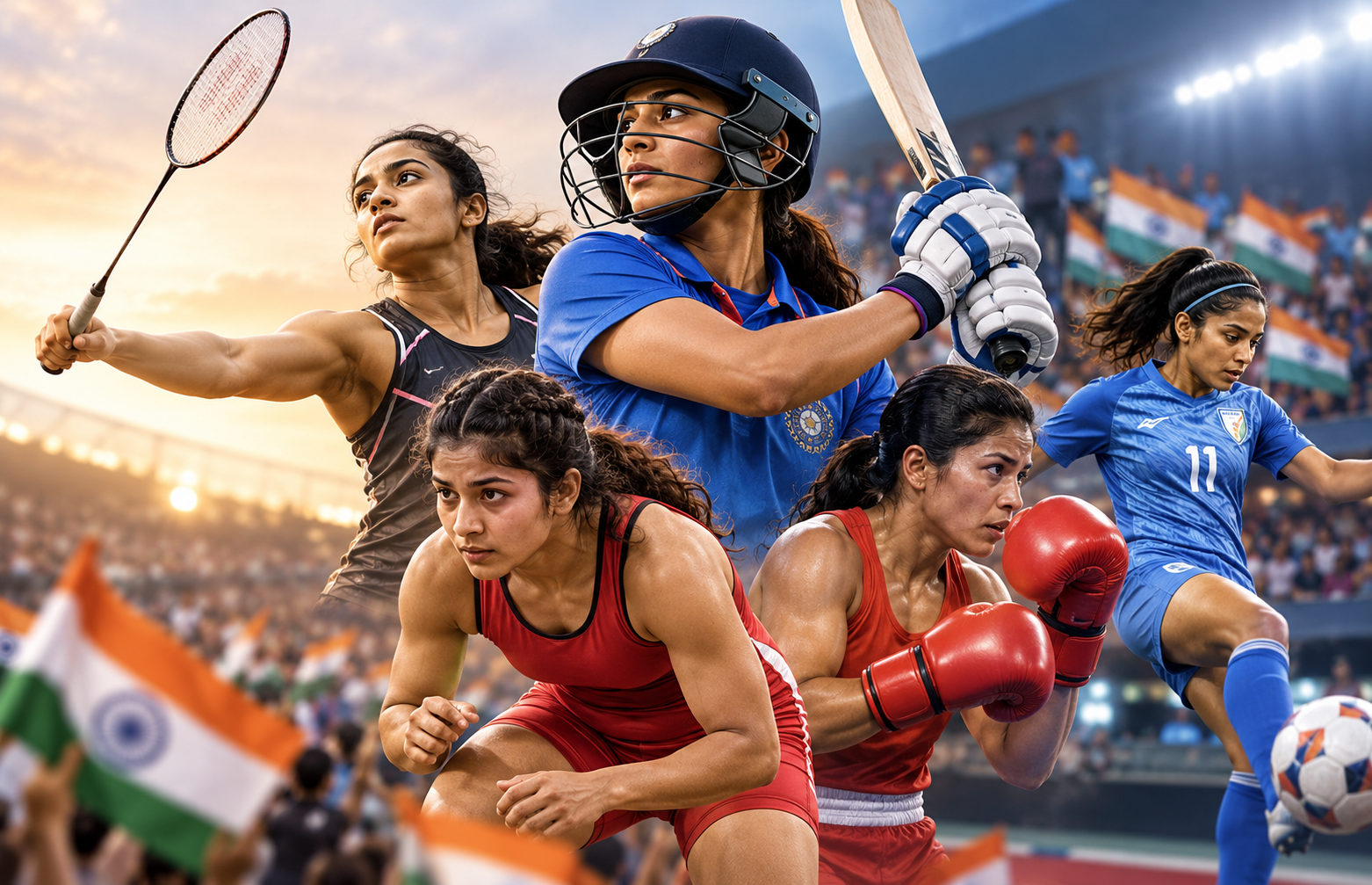

For years, women’s sports in India existed in a strange space. The talent was always there, the athletes were winning medals and making history, but the audience, media attention and commercial opportunities often came much later. Today, that gap is beginning to close.
Women are not just participating in more sports; people are watching them, talking about them, following their careers and supporting them as professional athletes. From packed stadiums to prime-time broadcasts and growing brand partnerships, women’s sports in India are becoming part of the mainstream sporting conversation.
So, what changed?
More women are stepping onto the field
The first part of the story begins with participation. Government initiatives such as the ASMITA Women’s Leagues have created more competitive opportunities for women across different sports. By the end of 2024, the programme had conducted 766 competitions across 20 disciplines, involving more than 83,000 women athletes.
The impact is also visible at the grassroots level. More competitions mean more opportunities for young girls to compete, be noticed and consider sport as something they can pursue seriously rather than simply as an after-school activity.
And cricket, unsurprisingly, has been one of the biggest drivers of this change.
The WPL changed the conversation
When the Women’s Premier League launched in 2023, it gave women’s cricket something it had been missing: a major franchise league with dedicated media attention, star players and a regular audience.
The numbers since then have been hard to ignore. WPL viewership reportedly more than doubled from 152 million in its inaugural 2023 season to 325 million in 2025 across television and digital platforms.
That growth matters because audiences create opportunities. As more people watch, broadcasters have more reason to invest, brands have more reason to advertise and players have more opportunities to become recognisable personalities beyond the cricket field.
The result is a cycle that can help women’s sport grow even further.
From watching occasionally to following regularly
The biggest shift may actually be happening among audiences.
A 2026 BBC and Collective Newsroom study, based on research by Kantar across more than 10,000 people in 14 Indian states, found that 51% of respondents had followed women’s sports coverage during the previous six months. Among young women, the figure was 54%.
Women’s cricket has also seen a significant jump in interest. The study found that 28% of respondents watched the WPL, compared with 15% who had watched the earlier Women’s T20 Challenge in 2020.
That tells us something important: women’s sports are no longer being watched only because there happens to be a major tournament. People are beginning to follow teams, players and competitions as fans.
Prime-time audiences are changing the game
Nothing demonstrates this shift better than the 2025 ICC Women’s Cricket World Cup.
The first 13 matches attracted more than 60 million viewers, while watch-time reached 7 billion minutes. The final went even further, with 185 million users watching on JioHotstar, a figure that matched the viewership of the 2024 Men’s T20 World Cup final on the platform.
That is no longer a niche audience.
It is a mainstream sports audience, and it changes how broadcasters, sponsors and brands can look at women athletes in India.
But there is still work to do
The growth is real, but it doesn’t mean the playing field is equal yet. The same 2026 study found that practical barriers such as lack of time and safety continue to prevent many women from participating in sport. It also highlighted persistent stereotypes around how sportswomen should look and behave.
There is also a noticeable gap between cricket and several other women’s sports. While the WPL has become a strong commercial property, athletes in sports such as athletics, wrestling, hockey and badminton still need greater visibility and consistent commercial support.
The next phase of growth, therefore, cannot be only about creating bigger audiences. It has to be about creating more opportunities across sports.
The Bigger Picture
The rise of women’s sports in India is no longer just a story about participation. It is a story about visibility, fandom, careers and commercial value.
Young girls now have more athletes to look up to. Athletes have more platforms to build their careers. Brands are beginning to see women’s sport as a serious audience opportunity. And fans are proving that they will show up when the sport is given the platform it deserves.
The journey from participation to prime-time audiences is still underway, but the direction is clear. Women’s sport is no longer waiting for its moment in Indian sports. It is creating one.
Tags
Related Posts




Finance
Emergency Funds Explained: How Much Money Should You Actually Keep Aside?
You never really know when an unexpected expense is going to show…

Travel
India’s New Weekend Economy: How Short Trips Are Changing Travel
What if you did not need a week-long holiday to feel like…

Business
Why Are Indian Companies Investing More in Employee Wellbeing?
A good salary can attract an employee, but it may not be…