Sports
Beyond Cricket: How India’s Sporting Infrastructure Is Expanding Across Emerging Sports


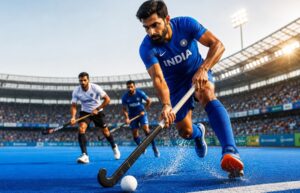
For decades, India’s sporting identity was closely associated with cricket. But that picture is changing. From badminton courts and athletics tracks to hockey turfs, swimming pools, multipurpose halls and training centres in smaller cities, the country is building a wider sporting ecosystem.
This expansion is not simply about constructing stadiums. It is about creating pathways through which a young athlete can move from discovering a sport locally to receiving professional coaching, competing nationally and eventually entering the high-performance system.
The scale of this shift is visible in the numbers. As of 2026, 349 sports infrastructure projects worth around ₹3,176 crore had been approved under Khelo India, alongside 1,067 Khelo India Centres and 267 supported academies.
From Cricket-Centric to Multi-Sport Infrastructure
India’s sporting infrastructure is becoming increasingly multi-disciplinary. Recent Khelo India projects include 126 multipurpose halls, 64 athletic tracks, 25 football fields, 29 hockey fields and 16 swimming pools, along with 84 other sports facilities.
That mix matters because emerging sports need specialised spaces. A badminton player needs indoor courts with appropriate flooring and lighting. A swimmer needs a properly equipped pool. An athlete needs a synthetic track. A hockey player needs quality turf.
Infrastructure therefore becomes more than a physical asset. It determines whether athletes can train consistently and whether sports can develop outside established sporting hubs.
Smaller Cities Are Becoming Part of the Sporting Map
One of the biggest changes is geographical. Historically, access to high-quality coaching and sporting facilities was concentrated around major cities and established sporting institutions. The expansion of Khelo India Centres is gradually widening that access.
By 2026, 1,067 Khelo India Centres had been established across more than 750 districts, according to government data. More than 23,000 athletes had received support across Khelo India verticals.
This creates opportunities for athletes who may not have the resources to relocate to Delhi, Bengaluru, Mumbai or other traditional sporting centres.
It is particularly significant for sports such as athletics, wrestling, boxing, weightlifting, kabaddi and indigenous disciplines, where talent can emerge from smaller towns and rural communities.
Badminton, Athletics, Hockey and Football Are Gaining Ground
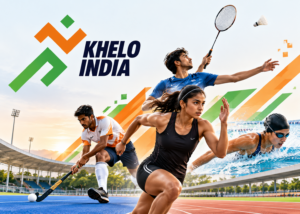
The infrastructure push is also strengthening sports that have historically had a smaller footprint than cricket.
Badminton is a clear example. India’s international performances have helped generate greater interest in the sport, while academies and dedicated indoor facilities have made structured training more accessible.
Athletics is another important area. The development of synthetic tracks allows young athletes to train in disciplines ranging from sprinting and middle-distance running to jumping and throwing events under more standardised conditions.
Hockey and football are also receiving dedicated infrastructure. The 2026 Khelo India infrastructure data includes 29 hockey fields and 25 football fields, alongside multipurpose facilities that can support several indoor sports.
The broader effect is that sporting infrastructure is beginning to reflect the diversity of India’s competitive ambitions.
Emerging and Indigenous Sports Are Getting Space Too
The expansion is not limited to Olympic sports.
Khelo India’s competition ecosystem now includes Youth, University, Winter, Para, Beach, Water Sports and Tribal Games. More than 63,000 athletes have participated in Khelo India Games since 2018, according to government data.
Traditional Indian sports are also being incorporated into the wider sporting system. Disciplines such as Mallakhamb, Kalaripayattu, Gatka and Thang-Ta have received recognition within Khelo India’s sporting framework.
This matters because infrastructure can influence which sports children encounter in the first place. When a district has access to facilities, coaches and organised competitions, participation can move beyond whatever sport happens to dominate local culture.
The Next Stage Is About More Than Buildings
India’s infrastructure expansion also points towards a broader understanding of what an athlete needs.
Modern sports development increasingly involves sports science, nutrition, rehabilitation, performance analysis and psychological support. In February 2026, for example, athlete facilities inaugurated at the National Institute of Sports, Patiala included an Integrated Sports Science Centre and Conditioning Hall, designed to support performance analysis, rehabilitation and recovery.
Talent identification is becoming more data-driven too. The Khelo India Rising Talent Identification programme, or KIRTI, had conducted more than 1.8 lakh assessments by June 2026, using structured assessments to identify sporting potential among young athletes.
This creates a potentially important shift: infrastructure is no longer being viewed only as grounds, courts and stadiums, but as part of an interconnected athlete-development system.
A Much Larger Investment Is Now Taking Shape
The direction of policy is also evident from the scale of funding.
The Union Budget 2026–27 allocated ₹4,479.88 crore to the Ministry of Youth Affairs and Sports, the highest allocation for the ministry at that point. The government also announced the Khelo India Mission and a ₹500 crore initiative focused on sports goods manufacturing.
In July 2026, the government approved a ₹36,441 crore combined outlay for the revamped Khelo India Scheme and enhanced support to National Sports Federations for 2026–27 to 2030–31. The expanded programme places emphasis on infrastructure, district-level talent identification, coaching, sports science and technology.
That scale suggests that India’s sporting infrastructure story is moving into a different phase: from isolated facilities towards a broader national ecosystem.
The Road Ahead
There is still a significant challenge: building infrastructure is only the first step. A sports facility needs qualified coaches, regular maintenance, equipment, competitions and affordable access to remain useful. States and local administrations also play a crucial role because sports infrastructure is primarily a state responsibility, with the Union government providing supplementary support.
Still, the direction is clear. India’s sporting landscape is becoming more diverse, more decentralised and increasingly focused on creating pathways for athletes beyond cricket.
The next generation of Indian sporting success may therefore come from places and disciplines that were previously outside the national spotlight. And when a child can find a quality track, court, pool or training centre closer to home, the definition of India’s sporting infrastructure begins to change from building stadiums to building possibilities.
Tags
Related Posts




Real Estate
Why Transit-Oriented Development Could Change How Indians Choose Their Next Home
Why Transit-Oriented Development Could Change How Indians Choose Their Next Home What…

Lifestyle
Why Your Sleep Schedule Matters More Than You Think: Understanding the Body Clock
You can sleep for eight hours and still wake up feeling exhausted.…

Finance
What Is a Credit Score Really Made Of? Understanding the Factors That Affect Your CIBIL Score
What affects your CIBIL Score, and how can you improve it? CIBIL…