Real Estate
Why Branded Residences Are Becoming a Major Luxury Real Estate Trend in India
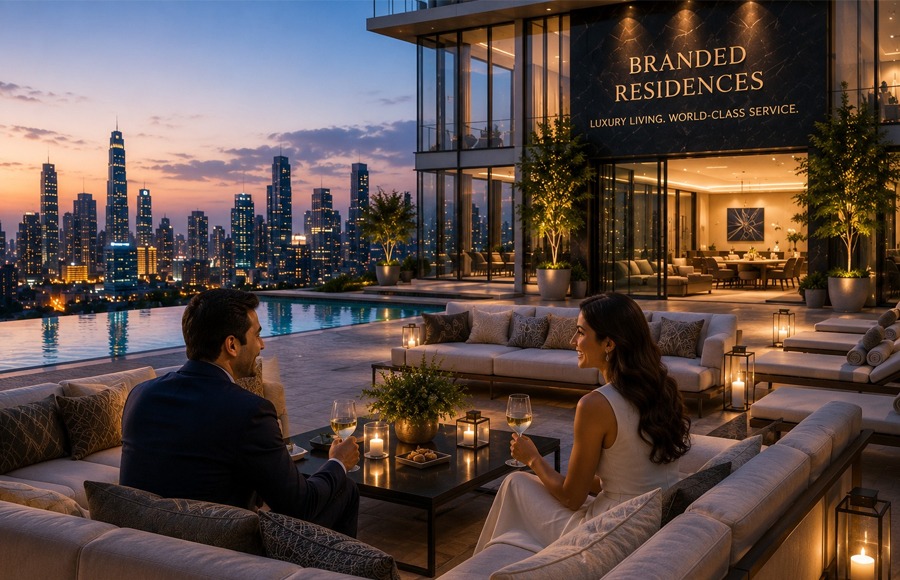

The luxury housing segment in India is experiencing a radical transformation. Luxury is no longer being perceived by high net worth buyers, as just bigger houses, prime locations, and extravagant interiors. Homebuyers of the future are now demanding service, privacy, comfort, well-being, security and a specific lifestyle for their own residences.
The concept is attracting attention in a new avenue: branded residences. Homes tagged under a known hospitality, life style, fashion or automotive brand, ‘Branded Residences are properties which integrate ownership of real estate with managerial competence and services known through the given brand.
Relevance of this trend has started appearing significantly from 2026 onwards. CBRE states, The concept of branded residences is expected to emerge as a significant trend in the Indian residential sector from 2026 onwards, driven by customer demand for professionally managed homes, global service standards and the collaborations between international brands and Indian developers.
What Are Branded Residences?
Branded residences A branded residence is a property of a residential nature, built in partnership with a well-known brand. Such a brand can be from the hospitality industry, lifestyle sector, fashion industry, automotive or health & beauty.
Instead of selling luxury apartment suites as we do, branded residences generally tend to provide consumers with a stable experience as the lifestyle.
Depending on the project, residents may receive access to services such as:
- Concierge assistance
- Housekeeping
- Valet services
- Premium fitness facilities
- Wellness facilities
- Private lounges
- Restaurants
- Security services
- Hotel-style property management
The actual services vary by project but the concept is to marry high-end private ownership with the very highest standards of professional hospitality and lifestyle management.
India’s Luxury Housing Market Is Expanding
Rise of branded residences is closely linked to the overall growth of India’s luxury home segment. CBRE said that India’s luxury housing market continued to grow in importance with this segment registering significant demand in recent times. Its India’s 2026 forecast also lists of a continued flight-to-quality” as rich buyers look to acquire larger and more premium properties.
The evolving demand then opens a scope for branded residences.
Wealthy buyers and HNI segment willing to Shell out more for premium experiences over mere additional square footage.
Buyers Are Looking for Experiences, Not Just Homes
One of the biggest reasons behind the popularity of branded residences is the changing definition of luxury.
Today’s luxury buyer may value:
- Privacy
- Personalized services
- Wellness
- High-quality design
- Technology
- Security
- Professional maintenance
Latest reports from India’s luxury property market suggests that for the modern, wealthy buyer it’s not just about having space but a holistic living experience with focus on wellness, privacy, sustainability, design intent and community.
Branded residences are well positioned to respond to these expectations.
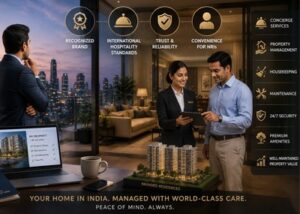
The Power of a Recognized Brand
A powerful brand can engender buyers’ trust and a feeling of familiarity.
With a prominent international hospitality or lifestyle brand being marketed within a residential property development, buyers can anticipate that there is a certain service, style or feel they are investing in.
That might set apart from a generic luxury property development.
A brand will also act as marketing advantage for a developer and allows the property development to establish itself within a highly competitive luxury property marketplace.
Hotel-Style Services at Home
Hospitality features is another of the unique elements to branded residences.
Residents may benefit from services which emulate those found at hotels, without requiring their stay as guests.
Such services may includeconcierg eservices, housekeeping, and maintenance service coordination and properly managed communal areas.
Branded residences are therefore a huge draws for buyers who travel a great deal, or for whom managing property and domestic related duties is not the most efficient allocation of their time. The convenience is clearly a massive draw.
Focus on Wellness and Lifestyle
Wellness has become an increasingly important component of luxury real estate.
Modern premium developments are incorporating features such as:
- Fitness centres
- Spa facilities
- Meditation areas
- Swimming pools
- Walking spaces
- Green areas
- Wellness lounges
This corresponds to the overall trend in Indian luxury housing toward healthy and experience-based lifestyle. Trends within the Indian luxury segment point to emerging consciousness for a wellness-driven lifestyle.
Branded residences can often incorporate these elements within a well-managed operation.
Strong Appeal Among HNIs and NRIs
High net worth individuals (HNIs) & non-resident Indians are some of the prime potential buyers of branded residences.
Managing a luxury home at an Indian location can indeed be a complex affair in case the NRI is living abroad.
This could offer him further luxury and convenience through proper property management and maintenance of common facilities in residence.
The connection with a well-known branded house could also bring a sense of comfort as buyers accustomed with global service standards are used to international hospitality service quality.
Potential Investment Appeal
Investors may also find branded residences appealing due to a differentiated positioning. A strong brand, great location, well-trained staff, and excellent on-site features can differentiate the product so as to keep it attractive for rich tenants, and owners-buyers as well. But do not assume all branded residences are great investments.
It makes no sense to buy branded real estate just because it’s branded and may yield better than others.
Don’t forget to consider buying price, location, maintenance costs, and availability of tenants, sell ability or resale value, and also contract with the brand owner.
Developers Benefit Too
The trend is not beneficial only for buyers.
Developers can use brand partnerships to differentiate their projects in competitive luxury markets.
A recognized brand can provide:
- Stronger project positioning
- International visibility
- Premium marketing
- Access to specialized expertise
- Differentiation from competing developments
CBRE singled out the growing partnerships between international brands and existing local developers as one of the positive contributing factors for the branding of residence in India.
Major Indian Cities Are Driving Demand
The luxury residential market of Mumbai remains one of the most robust in the country, but Delhi-NCR, Bengaluru and Hyderabad are not far behind to emerge luxury housing demand hotspots.
Research by CBRE has acknowledged Mumbai as one of the best luxury housing markets in India, with Delhi-NCR and Hyderabad also finding favor.
Growing number of wealthy Indian consumers and increasing luxury housing demand in the entire Indian cities may create potential space for branded housing concepts beyond the traditional luxury segment in the coming time.
Challenges Buyers Should Consider
Branded residences also come with potential disadvantages.
The biggest concern is usually the premium price.
Buyers may pay more because of:
- Brand association
- Premium amenities
- Professional management
- Hospitality services
- High-quality construction
Maintenance fees can also be higher than those of conventional residential projects.
Before buying customers need to know exactly what services are included and whether there’s any additional payment for other services.
Buyer should check developer record, approvals, construction quality, possession date and the documents.
The Future of Branded Residences in India
The future appears promising as India’s luxury housing market continues to evolve.
The next generation of branded residences is likely to focus increasingly on:
- Wellness
- Sustainability
- Smart-home technology
- Personalized services
- Privacy
- Hospitality
- Premium community experiences
The concept may also move beyond conventional hotel branding into lifestyles, automotive, health & wellness, etc.
The main trend seems obvious-luxury housing and real estate is becoming less about where one lives and more about how one lives.
Conclusion
Branded residences are taking up space in Indian luxury real estate, and this trend is being driven by a confluence of desirable luxury house features and expertise in management, hospitality services, a characteristic look and feel, and the overall luxury lifestyle experiences that branded residences can accommodate.
As affluent Indian consumers and NRI property buyers evolve and look for more than just luxury; luxury in home buying is now defined by convenience, privacy, health and well-being, technology and the provision of quality and sustainable services.
Branded residences allow developers to stand out in a crowded market and gain access to buyers in a higher value segment. For buyers and investors alike, a branded residence represents an exotic form of luxury ownership, albeit one where value must be assessed based on the price structure, included services and facilities as well as on the maintenance fee and location, and the inherent potential for long-term appreciation and returns. As the premium housing segment grows in India, branded residences could well become much more dominant features of Indian luxury property from 2026 onwards.
Tags
Related Posts




Business
Why Indian Businesses Are Rethinking Customer Loyalty in the Age of Quick Commerce
For years, customer loyalty in India was built around familiarity. You went…

Travel
Slow Travel in India: Why Travellers Are Choosing Longer, Deeper Trips Over Packed Itineraries
There was a time when a good holiday in India came with…

Sports
Beyond Cricket: How India’s Sporting Infrastructure Is Expanding Across Emerging Sports
For decades, India’s sporting identity was closely associated with cricket. But that…