Real Estate
Why Transit-Oriented Development Could Change How Indians Choose Their Next Home
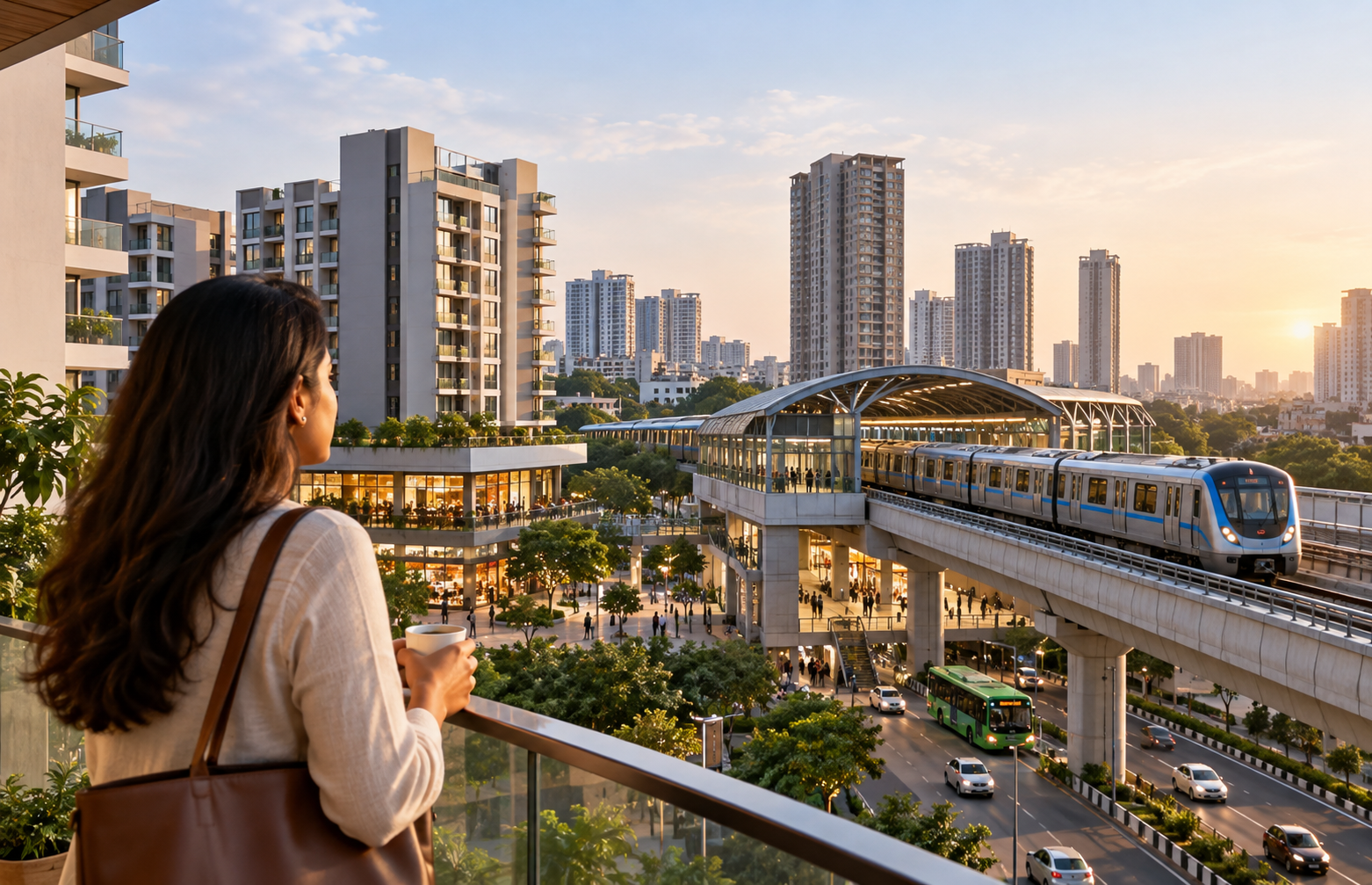

Why Transit-Oriented Development Could Change How Indians Choose Their Next Home

What if choosing your next home was less about the size of your living room and more about how quickly you could get to work, school, or your favourite café?
For years, homebuyers in India have largely focused on factors such as location, price, amenities, floor plans and neighbourhood reputation. The Ministry of Housing and Urban Affairs projects India’s urban population to reach 600 million by 2030, increasing the need for better-connected neighbourhoods. But as cities become more crowded and daily commutes get longer, another factor is becoming increasingly important: how well a home connects to public transport.
This is where Transit-Oriented Development, or TOD, comes in. The concept focuses on creating compact, mixed-use neighbourhoods around public transport hubs, allowing residents to live closer to stations and access everyday essentials without depending entirely on private vehicles.
As Indian cities expand their metro and public transport networks, TOD could gradually change what people consider a good location to live in.
Want to know what this means for your next home? Read the full blog.
What Is Transit-Oriented Development?
Transit-Oriented Development is an urban planning approach that brings homes, workplaces, shops, services and public spaces closer to public transport corridors.
Instead of designing neighbourhoods around cars, TOD puts convenient transportation at the centre. A typical TOD area may have residential buildings within walking distance of a metro or railway station, along with retail spaces, offices, restaurants and essential services.
The vision is to make everyday destinations easier to reach without needing a car for every journey.
India has already seen this approach develop around several metro networks, although the scale and implementation vary between cities.
Why Location May Mean Something Different in the Future
Traditionally, a desirable residential location might mean being close to a major road, business district, school or shopping centre. With expanding public transport networks, proximity to a transit station could become just as significant.
Imagine two homes that are similarly priced and offer comparable amenities. One requires a 45-minute drive through traffic to reach a metro station, while the other is a short walk from one.
For someone commuting every day, the second property could offer a very different lifestyle. This makes accessibility an increasingly important part of the location equation.
Commute Time Could Influence Homebuying Decisions

Long commutes are already a familiar part of urban life in cities such as Delhi NCR, Mumbai, Bengaluru, Hyderabad and Pune.
A home that appears affordable on paper can become less attractive when residents spend hours travelling between home and work.
TOD can potentially address part of this problem by placing housing closer to major transit connections.
For homebuyers, this could shift the question from:
“How far is my home from the city centre?”
to:
“How easily can I reach the places that matter to me?”
That distinction matters because a home farther from a traditional city centre may still be highly connected if it sits near an efficient transit network.
Walkability Could Become a Bigger Selling Point
TOD is not only about being close to a metro station. Walkability is an important part of the concept.
A well-planned transit-oriented neighbourhood should make it relatively easy to walk between residential buildings, transport stations, shops and other everyday facilities.
For Indian homebuyers, this could make previously overlooked factors more important, such as footpaths, pedestrian crossings, street lighting and access to daily conveniences.
A property advertisement may increasingly need to communicate more than square footage and amenities. Being able to say that residents can walk to a metro station, grocery store or workplace could become a meaningful part of the property’s appeal.
Property Developers May Adapt to Changing Demand
As buyers become more conscious of connectivity, developers may increasingly consider transit access when planning new residential projects. This could encourage higher-density housing around transport corridors, alongside commercial spaces and community facilities.
For developers, the opportunity is not simply about building near a station. The surrounding neighbourhood needs to function well for residents. That means connectivity, pedestrian access, retail, public spaces and essential services can all contribute to how attractive a development feels.
Could TOD Affect Property Values?
Better connectivity can influence the attractiveness of a neighbourhood, which may affect housing demand and property prices over time. However, the impact is not automatic.
Being near a metro station does not guarantee that a property will appreciate significantly. Factors such as infrastructure quality, neighbourhood development, supply, local employment, construction quality and overall demand still matter.
For buyers, this means transit proximity should be considered alongside the usual property checks rather than treated as a standalone reason to purchase.
What Homebuyers Should Look For
If you are considering a home in an area developing around public transport, look beyond the distance shown on a property listing.
Consider:
- Actual walking distance: Is the station genuinely walkable?
- Public transport connectivity: Does the network connect you to your workplace and other frequent destinations?
- Last-mile options: Are buses, autos, cycling routes or pedestrian paths available?
- Daily conveniences: Are schools, shops, healthcare and other essentials nearby?
- Future infrastructure: Are proposed transit projects officially planned, or are they simply being marketed as future possibilities?
- Neighbourhood quality: Does the area remain practical and comfortable beyond commuting hours?
These details can reveal whether a property is genuinely transit-oriented or simply located near a transport project.
The Future of Homebuying May Be About Time
For many Indian homebuyers, the definition of a desirable home is evolving.
A larger apartment, extra amenities or a bigger parking space may still matter. But as urban congestion increases, time and accessibility could become equally important considerations.
Transit-Oriented Development offers a different way to think about urban living: instead of building our lives around long journeys, neighbourhoods can be designed to bring homes, work and everyday necessities closer together.
For someone choosing their next home, the most important question may no longer be just “What do I get inside this house?”
It could also be: “How much of my life do I get back by living here?”
Tags
Related Posts




Lifestyle
Why Your Sleep Schedule Matters More Than You Think: Understanding the Body Clock
You can sleep for eight hours and still wake up feeling exhausted.…

Finance
What Is a Credit Score Really Made Of? Understanding the Factors That Affect Your CIBIL Score
What affects your CIBIL Score, and how can you improve it? CIBIL…

Business
The Rise of Micro-Entrepreneurship in India: How Small Creators Are Building Real Businesses
A creator with a phone, a niche audience and a good idea…