Real Estate
How Construction Cost Inflation Is Changing Property Prices and Developer Strategies in 2026
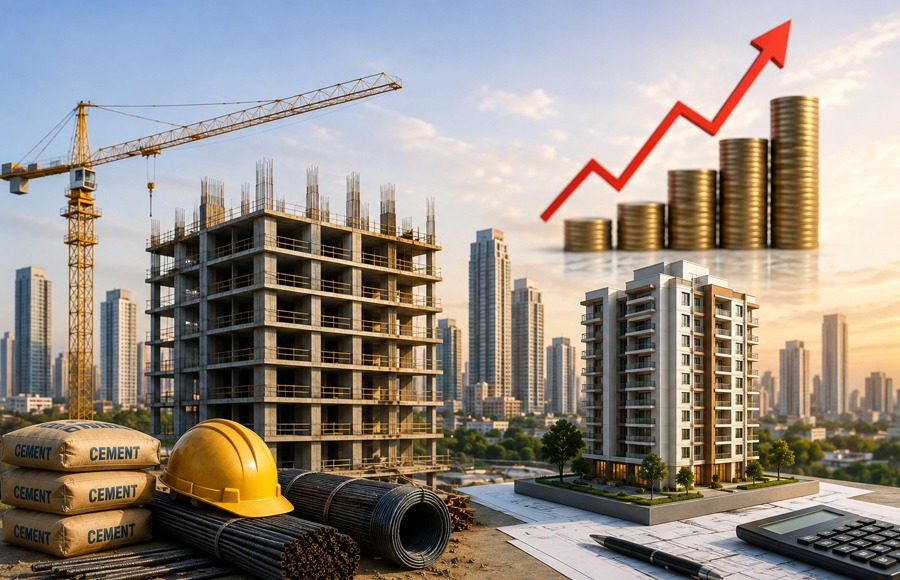

Construction cost is an enduring factor responsible for defining property prices. It influences the cost of real estate projects and may indirectly impact the property prices, project timelines, profits made by developers as well as construction activities undertaken on completion of the project. It involves the cost incurred on labour, cement, steel, machinery, transportation and materials, among other things to execute construction projects.
In the year 2026, construction costs continue to be relevant for Indian real estate development. According to JLL’sConstruction Cost Guide, India – 2026, construction cost would rise by 3–5% during the year across asset classes with labour being affected from manpower scarcity and regulations to a higher degree.
The implications not only for developers but home buyers and property investors also through changed project features, rise in property rates and types of houses.
What Is Construction Cost Inflation?
Construction cost inflation refers to the increase in expenses associated with developing a property.
Major components include:
- Cement and steel
- Aluminium and copper
- Labour
- Fuel and transportation
- Construction equipment
- Electrical and plumbing materials
- Finishing materials
- Regulatory and compliance costs
But that does not apply to all materials. Some could become cheaper, whereas others could increase or remain flat in price.
For example, JLL says that in 2025 cement and steel price fell by small amounts, diesel prices also fell, by a small amount as the price of crude had been decreasing. Aluminium and copper price increases were quite substantial. Labour costs increased due to a scarcity in skilled labour, but due to increase in infrastructure development an increase in labour costs was to be expected.
This makes construction budgeting increasingly complex for developers.
Why Construction Costs Are Rising in 2026
Several factors are influencing construction costs in 2026.
A couple of issues are impacting construction costs in 2026.
Labour is one of the pressures facing the sector, with JLL’s 2026 analysis noting the impact of India’s new labour framework and how labour costs are predicted to rise by between 5-12% across different skills categories.
In conjunction, global commodity market trends could impact prices for metals, fuels and other imported-energy-intensive materials.
A rise in fuel prices can increase the transport costs associated with construction projects; materials for a construction project are generally transported from the manufacturing plant to the job-site, meaning trends in fuel prices can affect construction costs both directly and indirectly.
How Higher Costs Affect Property Prices
Developers ultimately need to recover their project costs.
As long as the actual costs of construction rise sharply, developers have a few options. One is to chip in a slice of these increased costs themselves. They might shave some costs from other parts of their projects.
They might put the project on hold until market conditions improve.
Or they could simply raise selling prices.
So construction cost will contribute to higher launch prices for new projects.
As long as property will one day be priced this way, then your planned project which will be launched in 2026 is being compared against other existing projects which launched years before it – but at that time, the construction cost was not a significant factor in its pricing compared to location and specification.
Keep in mind though that construction costs is just one of the factors of pricing; there are land price, interest on borrowings, taxes and duties, approval fees and the demand and supply side of the market.
Pressure on Developer Profit Margins
The inflation in the construction sector has presented developers that sell units on the ahead with peculiar difficult dilemma. For the units already sold at pre-determined price, developers might have limited means to boost its revenue further. And in subsequent rise in cost to be incurred at the project, it could eat straight into the margins.
The problem, been reported within the industry in the last year, is especially relevant for the under-construction project where the selling prices can be fixed while the cost of inputs and labour continue fluctuate.
While financially fit developer with well-honed procurement skills can cushion some extent from short term increase, some smaller developers may be pressure further
Developers Are Becoming More Selective
Rising construction costs are encouraging developers to become more disciplined about project planning.
Before purchasing land or launching a project, developers increasingly need to examine:
- Construction cost estimates
- Expected selling prices
- Local demand
- Financing costs
- Project timelines
- Labour availability
- Material availability
- Expected profit margins
Those projects that looked so profitable using old cost basis may not do so any longer.
This in turn may cause developers to hold back projects or instead focus on geographies or property classes which already possess stronger demand.
Shift Toward Premium Housing
Interesting fallout of rising development costs is increasing attention on premium housing.
India’s housing market was already seeing a move towards higher-value residences; recent industry analysis show that higher-segment housing sales are outstripping those of lower-end housing in some markets and the increase in land and construction costs are rendering lower price-band projects harder to build at a profit.
A premium project can help developers command a higher per-unit revenue and provide greater buffer space for increased construction costs.
This is not to say demand for affordable housing has gone bust. The problem however is that building affordable homes is not easy when costs go up far faster than the purchasing power of buyers.
Changes in Project Design and Specifications
Developers may also respond to construction inflation by carefully reviewing project specifications.
Instead of simply increasing prices, they may:
- Optimize floor plans
- Reduce unnecessary structural complexity
- Standardize materials
- Improve procurement
- Use construction technology
- Reduce construction waste
- Select more efficient building systems
The aim is to control costs; however, this must not interfere with minimum quality.
But then potential buyers need to read the fine print and look more than just at the marketing material or how much is advertised for the project.
Technology Can Help Control Costs
Technology is becoming increasingly important in construction management.
Developers can use digital tools for:
- Project scheduling
- Quantity estimation
- Procurement management
- Building information modelling
- Construction monitoring
- Inventory management
With more data you can catch up delays and cost over-runs sooner.
Automation and newer building methods might boost productivity as well and reduce materials waste
Over time, these technologies could help developers manage cost inflation more effectively.
Supply Chain Management Becomes More Important
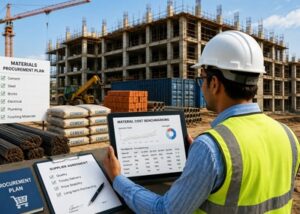
Hundreds of varied components are needed throughout a construction project. When delays in delivery of one occur, an entire project may be postponed. Developers are already looking more closely at procurement, relationships with suppliers and contractors, inventory controls and forward buying.
The 2026 forecast from JLL reinforces a need for rigorous cost benchmarking, and a quarterly review of critical commodities for developers working within the dynamic construction environment.
Procurement efficiency can be important when commodity prices are unstable.
What Does This Mean for Homebuyers?
Homebuyers should not automatically assume that every increase in construction costs will result in an equivalent increase in property prices.
Instead, buyers should compare:
- Price per square foot
- Construction quality
- Location
- Amenities
- Developer reputation
- Possession timeline
- Maintenance costs
- Competing projects
Additionally, when buying a property that is under construction, it’s advisable to note the payment schedule and the contractual agreement.
Although a lower initial cost, if delays or problems in construction occur, it is not always a best value.
Impact on Affordable Housing
Among these, rising cost, fuelled by construction inflation, will probably present the largest hurdle for affordable housing.
Increasing cost-of land, labour, and construction-has left the developer with few choices on how much of this can be passed on. It means that builders will probably seek to provide “move up” homes, or that homes at an affordable price will seek to also become aspirational housing-and thus are better suited to cope with inflating costs.
Rising construction and land prices were also cited by experts as contributing factor behind growing problems with the viability of affordable housing.
The Outlook for the Rest of 2026
Construction costs are expected to remain one of the main issues in India’s property sector in 2026.
Current conditions are still driven by factors that include labour costs, commodity prices and energy costs as well as supply-chains and infrastructure activity.
However, there are considerable housing market prospects for developers in major metropolitan areas which will likely be used to attempt to push some cost hikes onto the market where possible.
Conditions are likely to lead to a more discerning development environment benefiting those stronger financially, and better organised, developer.
Conclusion
Rising Construction Cost Inflation is Taking Indian Real Estate by Storm Construction Cost Inflation is transforming the Indian real Estate market in 2026. Growing workforce and material prices, transportation costs and prevailing global economic situation are creating challenges to the project budgets and developer margins in Indian real estate projects. Developers have responded with smarter procurement strategies, strategic project selection, adoption of new technologies, project costs optimization and an increased focus on high-end housing market.
While the developers adjust to the rising costs of construction, buyers need to do thorough research on property before buying.
Instead of solely focusing on the price listed, buyers are advised to also pay close attention to the construction quality, brand equity of the developer, project timeframes, location, specifications and ultimate cost-value proposition. In reality, construction inflation is not only an issue of increasing cost; It is increasingly emerging as a critical strategic determinant of what developers construct in what locations, how they price their developments, and what buyers can afford.
Tags
Related Posts



Business
The Subscription Economy: Why We’re Paying Monthly for Everything
Remember when buying something meant paying for it once and using it…

Real Estate
What Is a Pre-Launch Property? Things Buyers Should Know Before Investing
Imagine finding a property at a price lower than what the developer…

Health
Why Walking Is Having a Comeback: The Health Benefits of Getting More Steps In
You don’t need an expensive gym membership, a complicated workout routine, or…