Sports
The Evolution of Goalkeeping: How Modern Keepers Have Become Playmakers
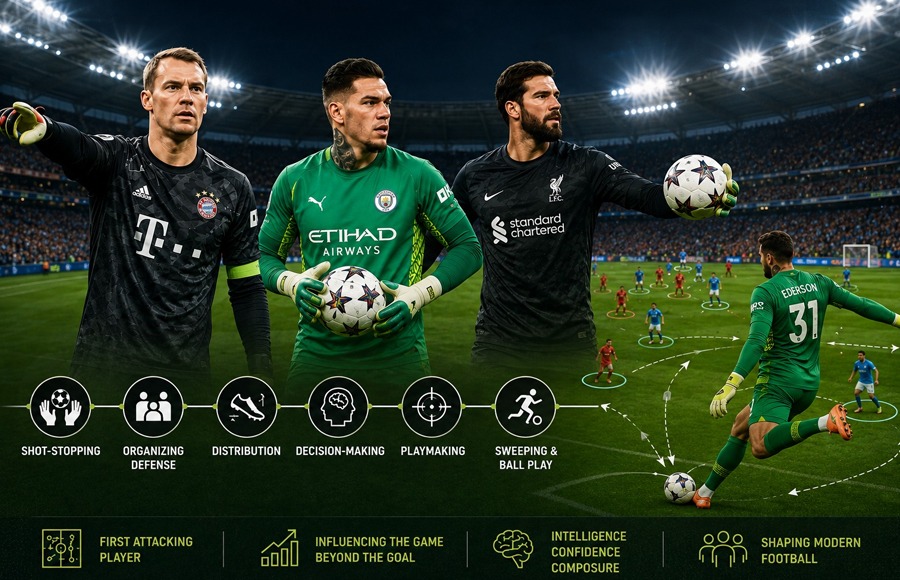

The role of a football goalkeeper is one that has probably altered more than any other position over the past few decades. In former eras, the duties of a goalkeeping in the game of football did not go any further than simply blocking shots, dealing with crosses from the opposing teams, organising the defence, and making sure that the ball does not cross their goal line.
The game of modern football has obviously made that level of demand completely insignificant for the professional modern goalkeeper. Indeed, many are now viewed in the modern game as the first out-field attacker who looks to start their team’s attacks as well as pass, make the right decisions when with possession, and often, this comes from even outside the penalty area.
From Shot-Stoppers to Complete Players
For most of football history the success of a keeper was measured by the goals he let in. His ability to pass with his feet was mainly confined to long clearances to defenders in close proximity. However with changing tactics the role of the keeper moved and coaches looked for keepers to be involved much more with his feet. Teams started to develop attacks from the back, so the keeper became an integral part of the first phase of possession.
Therefore a lot of the technical skills you would expect from an outfield player are needed by the modern keeper: passing accuracy, first touch, vision, composure and decision-making are all becoming crucial to a keeper’s repertoire.
The Sweeper-Keeper Revolution
One of the most noticeable changes in modern-day goalkeeping has been the introduction of the sweeper-keeper. A sweeper keeper move higher up the field to deal with attacks and space in behind his defenders rather than staying near his goal-line. It’s become best know through Manuel Neuer, who impressed all over the world playing for Bayern Munich and Germany, he played as if he had no fear venturing outside of his penalty area to receive balls played in behind and make life easy for his defence.
His excellent vision meant he his teams could sit with high defences with ease and less gaps for attackers to aim for to work on their. As a result of this the sweeper keeper is an effective tactical option for any teams keen to have possession of the ball and make an advantage on presses.
Goalkeepers as the First Attacking Player
In contemporary football, the building of an attack may start from the goalkeeper. Instead of simply looking to pass to a defender, some goalkeepers can scan their options to exploit space on the field and choose the most appropriate passing route, even under pressure. A GK may start an attack with a short forward pass in midfield or to an onrushing forward, a diagonal ball out to a full back, or a lengthy distribution forward to a team-mate well up field.
This requires awareness of play from around the field and tactical awareness in relation to the opposition’s setup. Bad choices can invite chances on your own goal; good passes will bypass opponent presses and start opportunities for yours.
Ederson and the Art of Distribution
Ederson is one of the most obvious examples of the keeper as a playmaker. Manchester City’s keeper has shown incredible foot work, passing range and confidence. His distribution range over long distances allows Manchester City to swiftly change attacking point. He will be able to pass accurately to team-mates on the other end of pitch in few passes rather than building up the ball over several short passes. His range also forces teams to think about the goalkeeper in their pressing. If they press City defenders and do not account for Ederson’s distribution, they open up areas for him to exploit.
Alisson’s Role in Liverpool’s System
Alisson Becker is another goalkeeper that has shown how much of playmaking a modern goalkeeper now demands as well as shot stopping prowess. His distribution at Liverpool allows the team to play through the lines and then switch the ball fast from defence to attack. Alisson’s variety of passes allows the team to play around pressure and find someone in the opponent’s half. However, Alisson is still integral to Liverpool’s defence because of his positioning, his ability to stand up for 1 on 1s and the ability to read the game to intercept balls. He also helps defensively to direct traffic at the back of the defence. These performances show you can be a modern playmaking keeper as well as performing traditional keeping duties.
Technology and Tactical Development
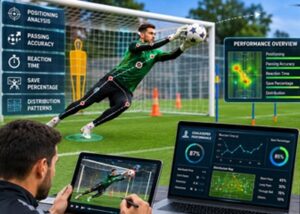
Technology has also made a change to goalkeeping training. Coaches are now able to see detailed performance information like where the keeper was positioned when the ball was attacking and what was their passing accuracy, how long it took them to react, what was their percentage of save and what was their distribution. All this information is now a lot easier to assess.
Goalkeepers can watch back and re assess their decisions during a game and see what can be worked on as well as the use of GPS systems and other coaching technologies. This can then be used by the coaches to work on the specific development of goalkeeping and footballing techniques.
Training the Modern Goalkeeper
Training for goalkeepers now involves much more. Training can now be more than traditional shooting training and it may involve passing exercises, games in possession, decision-making situations, and pressure in attacking positions and decision making games. Goalkeepers who are playing youth soccer are now encouraged and are increasingly pushed to be comfortable on both feet.
Goalkeepers work in Receiving skills, difficult distribution, discovering passing options and moving to catch rapidly.Good verbal communication, Goalkeepers may have better overall awareness of the game than anyone on the team, and are used to shouting instructions to the defenders and the team mates to identify potential attacking dangers.
The Risks of Being a Playmaker
However more possession means more risk. If a goalkeeper gives the ball away in a dangerous situation, then immediately the opposition could be a dangerous position. This has sparked a debate how far goalkeepers can over step what they already do. Coaches have a to take a decision what is best for each player to contribute to building play from the back. The most gifted modern goal keepers know when to make a short pass and when to swing it across or just to hammer it out!
Influence on Young Goalkeepers
The evolution of the elite goalkeeper is having an impact on the next generation. Now, young ‘keepers are being taught that goalkeeping is more than just, making a save. Academies now tend to focus on developing a goalkeeper’s passing and control, as well as their confidence and understanding of tactics from an early age. That, if anything, could further enhance the technical ability of our goalkeepers.
Conclusion
Modern keepers have come a long way from only stopping shots and sitting between the sticks, and the best goalkeepers now have a variety of skills to blend in with the whole side. Top keepers need reflexes and positioning, but they also have excellent passing ability, can be smart with their decisions, great communicators and a solid thinker tactically too. Players like Manuel Neuer have done a lot to bring forward the idea of being a sweeper keeper, while Ederson and Alisson are prime examples of how keepers can have an impact in build up through their distribution and composure on the ball.
Further evolution is on its way too and as sides start having even more of an emphasis on possession, pressing from deep and playing it out from the back, we’ll see keepers playing more and more part of the game. The best will even become your first line of attack, not just the last man back.
Tags
Related Posts


Business
The Rise of Micro-Entrepreneurship in India: How Small Creators Are Building Real Businesses
A creator with a phone, a niche audience and a good idea…

Real Estate
The Next Phase of Rental Housing in India: How Institutional Landlords Could Change Urban Living by 2027
The market for rental housing in India is evolving and entering a…

Health
The Importance of Healthy Posture for Preventing Everyday Back and Neck Pain
Back and neck pain are common afflictions in today’s world. Sitting at…