Real Estate
How Work-From-Home Culture Is Changing Housing Preferences


Work-from-home culture has radically transformed how people live, work and find a house. Starting from temporary measures for work during pandemic, remote working has now become an essential part for several organizations worldwide. Hybrid work and remote jobs are increasingly becoming a trend, especially within the information technology, digital marketing, financial, education and consulting sector.
When people are at home more than ever, their needs regarding a residential space changes. A house buyer or renter looks forward for much more than proximity to an office. They now desire comfort, space, connectivity and certain lifestyle amenities to fulfil both their personal and work needs.
This demand in the real estate sector is largely influencing the housing preference trends, across urban and suburban areas.
Demand for Larger Houses
The most significant shift observed due to the work-from-home culture has been the demand for larger houses. Buyers previously would be fine buying compact apartments, owing to most of their time being spent outside of it.
Nowadays, the remote working has led to an increased requirement of living space, where families look forward to having:
- Dedica
- Study rooms
- Additional rooms
- Flexi workspaces
- Developers have now started remodelling housing projects as well with work-friendly features.
Increase in Preference for suburban & Tier 2 Cities
Due to the flexibility of work-from-home, the dependence on commuting to major work hubs is also lessening. A lot of professionals have shifted from the congested metro cities, and are considering residing in the suburbs and tier 2 cities, with affordability and space being the primary concerns.
Jaipur, Chandigarh, Indore, Coimbatore, Lucknow are some cities which are becoming the desired destination for people willing to lead a good quality life without the expenses associated with bigger metros. The suburbs surrounding metro cities have seen an increase in the purchase of homes for two main reasons, along with that for the need of larger homes:
- Low cost of living
- Less traffic congestion
- Since most employees don’t commute to office daily, people are valuing lifestyles over distance to office.
Importance of Internet connectivity
- Now, the most crucial requirement in a house
- The one requirement which is now most significant when it comes to houses in remote working age is good internet connectivity. Internet infrastructure is now one of the key requirements a person considers when looking for a house to rent or purchase.
- Availability of high speed broadband, stable internet and mobile networks are given preference. Smart homes, modern houses with excellent technology features that cater to digital life, are now being heavily promoted.
- For people who work remotely, connectivity at their homes is as vital as water and electricity.
Smart Homes & Modern Facilities taking center stage
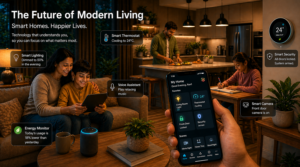
Smart homes and amenities in housing projects are also witnessing a sudden demand due to the work-from-home setup. Buyers look forward to homes which provide a higher degree of comfort and efficiency. These facilities include:
- Smart light systems
- Video door security
- High-speed Wi-Fi zones
- Additional amenities
- Business lounges, coworking spaces in residential society. A lot of housing projects have incorporated features like gymnasium, jogging tracks, gardens, meditation centers, recreation zones for a lifestyle.
Outdoor space now highly valued
Because of spending so much time inside the house, the value of outdoor and open spaces like balconies, terrace, garden, park, etc. Has greatly increased. Sunlight, ventilation and green spaces are a high priority while buying/renting a home. People prefer buying homes in housing societies that offer these basic amenities like landscaped gardens, open spaces and play areas. This will promote better living for a person to grow his own food, as well as stay healthy with a lot of sunlight and fresh air.
Rental trends witness a shift
There has been an impact on rental markets too, due to the work-from-home culture. People have started to shift back to their hometowns or more affordable cities, while working remotely for some companies, in expensive metropolitan cities.
Due to this, a lot of residential spaces are left unoccupied in some of the metro cities, thus increasing their availability and in turn the demand, whereas in the suburbs and tier 2 cities there is an increase in demand for houses, and thus houses, in the suburbs, would soon become a luxury to rent.

Buying of houses being prioritized
Pandemic and work from home culture has encouraged individuals to prioritize housing security for their long-term future. Along with being the place of living, home has also become the place where people work. As it forms such an important part of people’s life, home ownership now holds an increased value, emotionally and monetarily. Many renters are willing to buy a home which will suffice their future needs. The low interest rates for home loans over the last few years, have further encouraged buying houses. Buyers now consider home as not just the space to live but a space for work, education, leisure, fun, family as well.
It is true
- Need for flexible layouts
- In terms of aesthetics and the need for more
- The requirement for wellness amenity
- Requirement for better balconies and green space.
- Such that now the demand for mixed-used developments is growing more than ever as it provides less travel time, more space, comfort etc.
- The Future of Housing Trends
Work-from-home trends are expected to continue even post-pandemic and offices start opening their doors for employees. It is now obvious that the work-from-home culture will continue to have its influence on the future housing trends.
Houses have now become not just the space where you relax, but the place of work, play and everything else. This will surely continue in the years to come, with smart homes and better facilities ruling the market.
Conclusion
The trend of work-from-home has completely changed the requirements in housing and property, as space, comfort, connectivity, wellness, and flexibility have become the key priorities now. The demand for larger houses, properties in suburbs and tier 2 cities, smart homes, and mixed-used developments has greatly increased. Housing developers are striving to meet the needs of the home buyers. With increasing trend of work-from-home culture, the housing trends are surely to change in the future.
Tags
Related Posts



Health
Gut-Brain Connection: How Digestive Health Can Affect Mood and Everyday Wellbeing
Have you ever experienced a nervous stomach before an important meeting or…

Finance
Digital Gold vs Physical Gold: What Indian Investors Should Know Before Buying
Gold has always had a special place in Indian households. It can…

Business
Why Indian Businesses Are Rethinking Customer Loyalty in the Age of Quick Commerce
For years, customer loyalty in India was built around familiarity. You went…