Finance
How Indian Banks Are Targeting Gen Z: The Future of Youth Banking and Financial Services
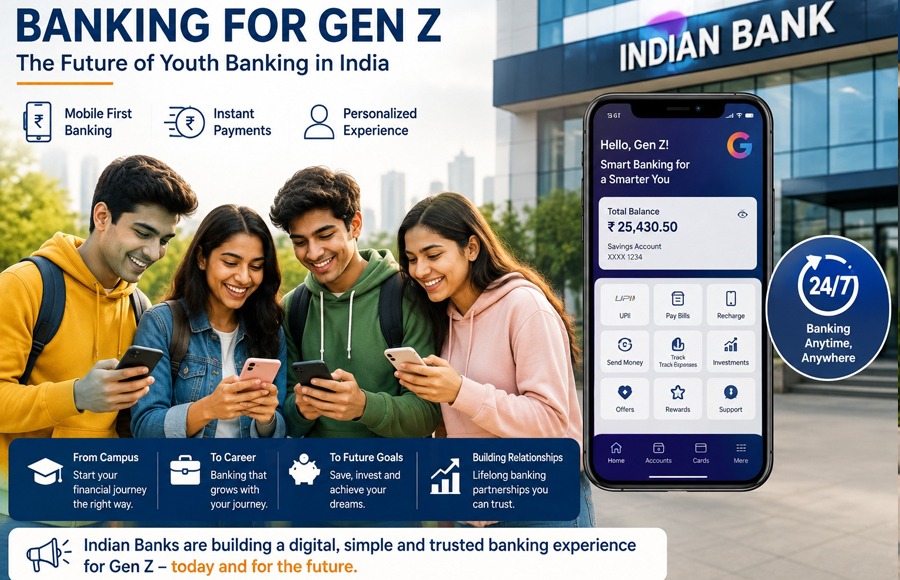

Gen Z is shifting India’s banking industry India is at the precipice of a new era for its banking industry with the rise of Generation Z customers who expect their money management to keep pace with their always-connected, smartphone-first lives. Gen Z customers, who grew up with smartphones, payment apps, and the internet, look for simple, instantaneous financial services and want to engage with their banks on the devices they use most. Banks, meanwhile, are recognizing that capturing Gen Z goes beyond just the opening of a checking and savings account.
Instead, they are increasingly focusing on building deeper, more meaningful customer relationships that begin with this generation at a young age, extend into their college years and then continue into their careers as their financial needs grow.
This transition is increasingly significant for Indian banks now, as in 2026 Finance minister Nirmala Sitharaman has asked state-owned banks to step up engagement and build relationships with the Gen Z cohort that can transition the customers from their university years to their jobs. The minister is hoping to nudge the country’s PSU banks to simplify their products and ensure seamless, round-the-clock services for the generation of the 21st century.
Why Gen Z Matters to Indian Banks
The sheer size of India’s Gen Z population places young consumers among financial services’ most significant potential future market. One of every five Gen Zers worldwide resides in India, according to a report by EY India.
The same report also noted that 83 percent of Gen Zers favor a digital-first approach when using financial services, yet also require human contact during crucial decisions regarding their finances. This creates a peculiar dilemma for banks: younger consumers demand technologically forward yet personalized financial service experiences but also expect security and advice from their bank when it comes to a truly life-impacting financial choice.
Having a loyal young consumer on board today could also yield a client relationship worth decades for a bank.
The Rise of Mobile-First Banking
Traditional banking once depended heavily on branches, paperwork, and face-to-face interactions. Gen Z has grown up with a very different expectation.
Young customers increasingly expect to be able to:
- Open accounts digitally
- Check balances instantly
- Transfer money through UPI
- Pay bills through mobile applications
- Apply for financial products online
- Receive transaction notifications immediately
- Manage cards from their smartphones
UPI has played a major role in shaping these expectations. NPCI data shows that UPI processed more than 23.2 billion transactions in May 2026, demonstrating how deeply instant digital payments have become embedded in everyday financial activity.
Banks have therefore now a battle on their hands, both for their products and for their customer’s experience online.
Banking Designed Around Lifestyle
Indian banks understand that for Gen Z, the banking experience doesn’t really occur as a distinct activity. Money and banking are related to your studies, entertainment, travel, retail purchases, subscriptions, online shopping, food orders, your jobs and businesses. That’s what encourages banks to explore lifestyle perks on a wider scale.
In fact, Finance Minister Nirmala Sitharaman said recently that banks can pull more young customers with programs such as providing courses and vouchers for their lifestyle activities.
More importantly, if banks are to succeed with young er customers then they need to seamlessly blend into their digital lifestyles, not just offer products.
Rewards, Cash back and Convenience
Rewards are a key feature of youth banking too. According to research from EY, Gen Z is especially keen about cash back, and also gets attracted to rewards. Research found that for Ease and cash back, 68% choose UPI. 46% on the other hand prefer Credit cards for Rewards and discounts.
Banks thus have the scope to engage through loyalty rewards for young adults in a bid to build better financial habits.
But a young spender might not necessarily remain loyal for only rewards. Youngsters are most likely to shop around other banks, banks, credit cards or even FinTech platforms before depositing money in.
Multiple Bank Accounts
However, a really intriguing element of Gen Z financial behaviour is their willingness to have several accounts in various financial institutions. EY analysis revealed 48% of Gen Z has several accounts, usually to isolate business accounts from individual funds, gain access to various functions and offers from numerous banks or spread cost of risk across various accounts as an additional protection aspect.
So that suggests no bank can depend on providing Gen Z’s very first account ensuring their allegiance; financial institutions need to continue supplying value and appealing experiences to attract and preserve their patronage.
Trust Still Matters
While undeniably digital savvy, Gen Z is not ditching legacy banks entirely.
EY’s analysis showed that 45% of their interviewed Gen Z respondents still favour a public-sector bank primarily because of its branch and ATM convenience, brand standing and trustworthiness.
It offers the biggest lesson for banks; technology allows for easier access but trust matters the most. A Gen Z customer might use a payment app readily for daily expenses, but will go to an institution that they trust and have come to rely on for huge financial commitments, say like a home loan, to investment of savings, or buying an insurance policy.

Financial Education as a Growth Opportunity
Young customers are entering the financial system earlier than previous generations, but access to information does not always mean financial literacy.
Banks can strengthen relationships by providing simple educational resources about:
- Budgeting
- Saving
- Credit scores
- Responsible borrowing
- Investing
- Insurance
- Tax planning
- Fraud prevention
This may enable Banks transition from providers of transactions to a lifelong trusted Financials partner.
The government’s larger focus on AI-driven financial inclusion suggests that technology in the future may provide tailored financial products or facilitate simpler access to services, too.
The Future of Youth Banking
In addition to the convenience of mobile and internet-based services, the future of youth banking in India will probably feature more personalized money management advice.
As banks grow ever more adept at using data and AI to crunch information, they will be able to identify who their younger clients are, suggest appropriate and relevant financial products, flag suspicious activity, and offer customized money-management coaching. In parallel, there will also be a greater focus on cyber security and responsible lending – with bank account holders able to execute more financial activities remotely, banks will need safeguards against digital fraud, over-indebtedness, and similar risks to prevent them falling into unnecessary traps.
Conclusion
For Indian banks, it’s clear that throwing one more mobile banking app at Gen Z isn’t going to be the magic ingredient. They want speed and convenience, with rewards, personalization, trust, and help managing their money. The banks that can deliver a blend like this can foster lifelong customers, guiding their journey from their first student bank account to their first paycheque, investments, home loan, insurance and eventually retirement. So for the banking sector in India, not only is the younger generation a new customer set – it is the very bedrock upon which the future of financial services in India will be built.
Tags
Related Posts




Sports
Beyond Cricket: How India’s Sporting Infrastructure Is Expanding Across Emerging Sports
For decades, India’s sporting identity was closely associated with cricket. But that…

Real Estate
Why Transit-Oriented Development Could Change How Indians Choose Their Next Home
Why Transit-Oriented Development Could Change How Indians Choose Their Next Home What…

Lifestyle
Why Your Sleep Schedule Matters More Than You Think: Understanding the Body Clock
You can sleep for eight hours and still wake up feeling exhausted.…