Finance
How the PM Jan Dhan Yojana Revolutionized Financial Inclusion in India
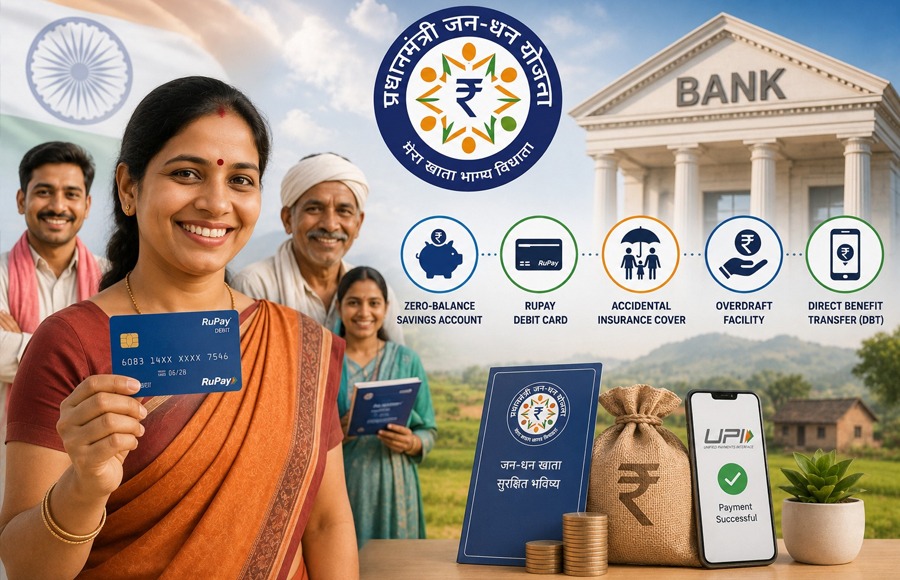

Financial inclusion is very important for the growth of economy of any country. This includes access to affordable basic financial products like bank accounts, savings, credit, insurance and digital payments to all individuals, irrespective of their income levels or whereabouts. For several decades, millions of Indians had remained out of the reach of banking sector, mostly due to their dwelling in rural areas. Hence they were neither able to store their savings, not able to avail any benefit from the government schemes nor were they able to develop a sound financial stability.
The Government of India took an important step towards tackling this issue and launched the Pradhan Mantri Jan Dhan Yojana(PMJDY)on August 28, 2014 to provide all households in the country access to financial facilities. Since then, it has emerged as one of the world’s largest financial inclusion schemes, impacting the lives of millions of Indians.
What Is PM Jan Dhan Yojana?
The Pradhan Mantri Jan Dhan Yojana (PMJDY) is the national mission for financial inclusion that ensures access to financial services, namely, banking, and savings and deposit accounts, credit, insurance, and pension in an affordable and accessible manner to all. It provides for the opening of a basic savings bank deposit account with zero balance and minimum paperwork.
Key features of PMJDY include:
- Zero balance savings account
- RuPay debit card
- Accidental insurance cover
- Overdraft facility for eligible account holders
- Direct Benefit Transfer (DBT) of government subsidies
- Access to banking and digital payment services
Through the scheme, even the low income family can be part of the formal banking system.
The Need for Financial Inclusion in India
Before the launch of PMJDY, many Indians depended on cash transactions and informal money lenders.
Common challenges included:
- No access to bank accounts
- High interest informal loans
- Limited savings opportunities
- Difficulty receiving government benefits
- Lack of financial security
Many families found it difficult to save, obtain credit at a low rate of interest without banking facilities. The case for financial inclusion is not just the cause of individual wellbeing but it also is essential for the development of the Indian economy.
Making Banking Accessible to Everyone
One of the biggest achievements of PMJDY has been expanding banking access across the country.
Banks organized large-scale account-opening drives in:
- Rural villages
- Semi urban towns
- Urban communities
In the banks in remote areas it was helped by a group, by opening the bank accounts people did not have to go too far for banking services. This also led to millions of previously under-banked citizens joining the formal financial system. Financial participation has grown in India on account of this.
Empowering Rural Communities
Rural India has benefited enormously from the scheme.
Many farmers, daily wage workers, and small business owners now have access to:
- Safe savings accounts
- Banking services
- Government subsidies
- Digital transactions
However, the impact on the women in rural areas, can be the biggest, as payments could finally make it directly to their bank accounts! Now people do not have to rely solely on cash and financial autonomy has been achieved.
Boosting Direct Benefit Transfers (DBT)
One of PMJDY’s significant advantages is its effect on the distribution of government benefit schemes.
Examples include:
- LPG subsidies
- Pension payments
- Scholarship funds
- Farmer support schemes
- MGNREGA wages
This system has:
- Reduced leakages
- Increased transparency
- Minimized corruption
- Ensured faster payments
Beneficiaries receive funds directly without intermediaries.
Encouraging Digital Payments
PMJDY has also accelerated India’s digital payment ecosystem.
Account holders receive RuPay debit cards, allowing them to:
- Withdraw cash
- Make digital purchases
- Access ATMs
- Perform online transactions
The growth of digital banking has further expanded through:
- UPI
- Mobile banking
- Internet banking
- Aadhaar-enabled payment systems
Digital services, the financial services, helped in increasing convenience and accessibility to the consumers after the sudden increase of digital payments in India.
Financial Security Through Insurance
PMJDY offers more than just a bank account.
Eligible account holders receive:
- Accidental insurance coverage linked to the RuPay debit card
- Access to life insurance benefits under specified conditions
- Overdraft facilities after satisfactory account operation
In case of emergency this facility is financial security to low income families.
Insurance cover helps in the better confidence when people access a financial product for the first time.

Encouraging Saving Habits
Access to formal banking has encouraged many families to save regularly.
Instead of keeping cash at home, account holders can safely deposit money into their bank accounts.
Regular saving helps households:
- Build emergency funds
- Manage unexpected expenses
- Improve financial discipline
- Plan for future goals
Small savings go a long way to secure your financial future.
This transformation from cash storing to savings have positively contributed towards improving household finances.
Challenges and Areas for Improvement
Despite its remarkable success, PMJDY still faces certain challenges.
These include:
- Limited financial literacy in some regions
- Dormant or inactive accounts
- Limited awareness about banking products
- Digital literacy gaps
- Internet connectivity issues in remote areas
For the Scheme to be a success more emphasis must also be put on providing better education about the product and ensuring the accounts are used regularly. Improving our online presence and encouraging awareness of digital payments will boost financial inclusion even more.
Financial Lessons from PM Jan Dhan Yojana
The success of PMJDY offers valuable financial lessons:
- Financial Inclusion Drives Economic Growth: Being a bankable individual or an account holder helps individuals become an active player in economy.
- Small Savings Matter: By consistently saving, even if only a little at a time, you build financial security for the future.
- Digital Banking Improves Accessibility: Banking is now faster, safer, and more convenient thanks to the availability of technology.
- Government Support Becomes More Effective: This approach allows funds for benefits to be dispersed directly to rightful beneficiaries quickly.
- Financial Literacy Is Essential: Access to banking should be accompanied by financial education in order to make it useful.
Conclusion
PMJDY has achieved a landmark in promoting financial inclusion by bringing in crores of Indians to the formal financial system. By providing for zero-balance bank accounts, enabling digital transactions, facilitating the Direct Benefit Transfer, providing financial security in the form of insurance, and making financial services accessible to millions, PMJDY has significantly enhanced household financial stability in the country. Although challenges such as improving financial literacy and enhancing digital skills still persist, PMJDY has provided the basic architecture for a truly inclusive financial system and a testament to how public policy in combination with the banking system and technology can provide benefits for individuals, reduce disparity, and boost long-term economic development of the country.
Tags
Related Posts




Business
The Subscription Economy: Why We’re Paying Monthly for Everything
Remember when buying something meant paying for it once and using it…

Real Estate
What Is a Pre-Launch Property? Things Buyers Should Know Before Investing
Imagine finding a property at a price lower than what the developer…

Health
Why Walking Is Having a Comeback: The Health Benefits of Getting More Steps In
You don’t need an expensive gym membership, a complicated workout routine, or…