Travel
Best Floating Villages Around the World Worth Visiting
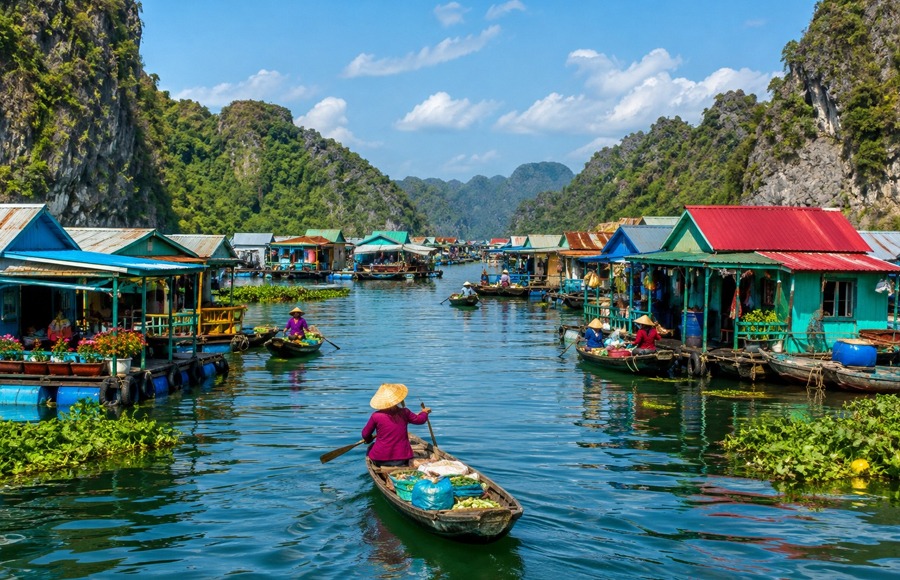

Travelers are captivated by a community that adapted to living on water instead of conventional neighbourhoods and streets. Houses, the market, the local school, restaurants and even holy places in a floating village perch on the water’s surface on a body of water like lake, river and the sea. Living in these communities is nature intensive where life in water is centred on fishing, farming, and boater trade and water sports.
Visiting floating villages brings you the chance to embrace their culture while getting to know fascinating local traditions.
Here are a few of most exquisite float villages from across the planet, including one of best spots not far in Asia; and others not only from Europe and Asia, but also from across the South and North American continents.
Kampong Phluk, Cambodia
On the very border of Tonle Sap is the unusual stilted and floating village of Kampong Phluk. This village is on the periphery of a flooded forest, very dependent on the water level which increases and decreases at different times of year. In the wet season, access is via a boat, on flooded paths, and the houses then look like they are floating on water. Many of the residents still work on fishing and living on the lake. A boat tour of the village gives an intimate look at life around tonles Sap.
Chong Khneas, Cambodia
The next popular place with the lake is Chong Khneas. It was originally another floating community where houses and shops were built to accommodate high and low water seasons. In Chong Khneas, a boat journey allows visitors to get a first hand look into the life of locals, house-schools on the lake and floating shop houses. Local fisheries contribute heavily to local livelihoods and a fishing village also lies on the border of Chong Khneas. It was a fascinating place and enjoyable visit for those interested in environmental and community adaptation in the lake setting.
Ganvié, Benin
Ganvie is perhaps the most iconic lake village in Africa. Built on the shores of Lake Nokoue in West Africa, Ganvie, dubbed “the Venice of Africa”, features numerous housing units as well as a thriving market, school and several commercial enterprises, all linked by canals and water. Most residents communicate and transact with neighbours and local businesses using pirogues. Fishing is integral to Ganvie’s social and economic fabric.
Visitors can paddle around in a pirogue through its residential waterways viewing houses, the fishery, and the busy market on water. Ganvi remains an emblem of cultural practice rooted in a special relation of the community with the water resources.
Uros Floating Islands, Peru
The Uros Islands are a group of unusual man-made floating villages in the world, situated on Lake Titicaca. The islands themselves are predominantly built from totora reeds that are plentiful in the waters of the lake. The Uros tribe has created specific traditions in building and weaving linked to this particular environment.
Tourists can visit the islands, which are linked by bridges, and discover ways of building, crafting and living. In the distance the immense lake waters flow over towards mountains, and provide an unforgettable vista.
Ma’ashan and Floating Communities of Tonlé Sap
Tonlé Sap hosts many communities that must adapt their routines and way of life to the seasonal variations of the lake. In and around villages such as Kampong Kleang the inhabitants have built houses adapted to water level fluctuations.
There are houses precariously perched on extremely long stilts and others that are moved and re-situated in accordance with the season. Going on a boat trip is the best way to admire how a community thrives with and by this immense river of fresh water. They will also be able to see fishing scenes and daily activities.
Inle Lake Villages, Myanmar
The Inle Lake is known to have groups of houses situated on and above the water; these houses together with floating gardens, the boats, and specific fishermen methods, compose unique scenery. There, a special type of traditional and peculiar fisherman can be met on the lake, who traditionally developed a system of rowing with legs, while the hands could remain free, to devote themselves to fishing. People can cross the lake by boat and get to see a range of floating gardens, artisanal and traditional shops, as well as markets, including villages.
Giethoorn, Netherlands
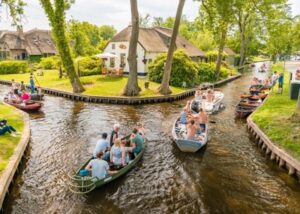
Giethoorn presents a different kind of watery lifestyle. This pretty village of thatched roof houses, small, cute bridges, charming gardens and narrow canals has become known as “the Dutch Venice”. The village’s main “roads” are in fact canals, and these connect its scattered homes.
Getting around is a joy, as you may hop aboard of an electric boat tour, rent your own boat, or simply get around by walking on the well-developed pathways lining the waterways. Giethoorn is one of Europe’s most instagrammable water villages.
Tai O, Hong Kong
A stilt fishing village. Located in Lantau Island, Tai O maintains most of its own fishing village’s style despite rapid urbanization of Hong Kong. Visitors can wander around its narrow streets, visit some local markets or have boat ride on the water ways within the villages. The village is very popular to eat delicious seafood, visit the markets and view the dried seafood for sales.
Floating Villages of Ha Long Bay, Vietnam
People have historically lived on water in floating fishing villages around H Long Bay. The local houses and fishermen’s sheds were once located in water so that villagers did not have to abandon their source of living far from where they lived and worked on the bay. Many of the original houseboats on the bay have now abandoned for those in residential area.
However, it still shows an essential part in H Long Bay’s cultural tradition. You will be greatly impressed with the beauty of the islands and learn about traditional life of coastal people as you navigate the bay on a boat tour.
Floating Villages of Tonlé Sap, Cambodia
Beyond single villages, the Ton Sap area is one of the most fascinating examples of aquatic communities in the world. Flooding varies greatly between seasons and the local people have consequently developed houses, boats, and careers that reflect the particularities of this climate.
Visitors to the area can experience, floating markets, fishing boats, riverside landscapes and authentic villages. The region shows the ability to human settlement adapt to changing natural environments.
Tips for Visiting Floating Villages
Travelers should bear in mind that floating villages are inhabited communities rather than mere tourist traps. Be respectful of local customs and ask for permission prior to taking pictures of villagers and not to interfere with fishermen on their rounds.
Select local responsible tour operators. Support local owned shops and businesses whenever possible. Avoid bringing plastic trash back from floating villages; use waste management rules.
Travel in specific seasons can also improve traveller’s experience-water levels greatly change the appearance of certain communities, as well as accessibility to some of them.
Conclusion
Floating villages give us an amazing overview into what human beings are capable of along with their culture and traditions. Whether traveling the Reed Islands of Lake Titicaca, the waterways of Cambodia, the stilt houses of Hong Kong, or the canals of the Netherlands, a traveling experience at all of these locations offers a vastly different experience.
For travelers who’d prefer to skip the typical tourist spots these communities have to offer can offer something new and different as these will give travelers the chance to experience, custom architecture, customs, picturesque scenery and lifelong relationships between humans and water. A trip to a floating village has to be not only the most interesting experience, but a journey as well.
Tags
Related Posts
Real Estate
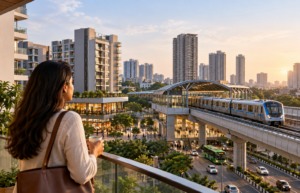
Why Transit-Oriented Development Could Change How Indians Choose Their Next Home
Why Transit-Oriented Development Could Change How Indians Choose Their Next Home What…
Lifestyle
Why Your Sleep Schedule Matters More Than You Think: Understanding the Body Clock
You can sleep for eight hours and still wake up feeling exhausted.…

Finance
What Is a Credit Score Really Made Of? Understanding the Factors That Affect Your CIBIL Score
What affects your CIBIL Score, and how can you improve it? CIBIL…