Health
The Importance of Healthy Posture for Preventing Everyday Back and Neck Pain
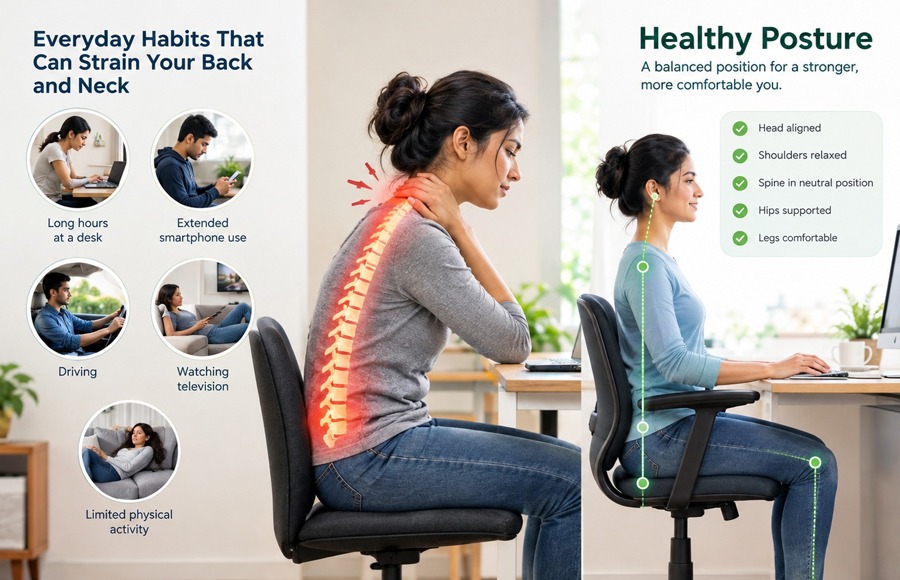

Back and neck pain are common afflictions in today’s world. Sitting at a desk for long periods, using your smartphone for hours at a time, driving, watching TV, and inactivity all contribute to putting increased demand and strain on the muscles and joints of the spine. Although posture isn’t the only reason for back and neck pain, maintaining a healthy postural position can aid in reducing the strain on the system.
Good posture is when your head, shoulders, spine, hips, and legs are in a position of support in sitting, standing and movement. Good posture is not to be held all day long in an in-erect, rigid position; but to be in an even position and in an appropriate position of change.
Why Posture Matters for Your Spine
The spine is designed to carry the weight of your body while your body is mobile and functional. For example, time spent in a position that is less than ideal or unsupported may cause some muscles to become disproportionately overworked as well as cause fatigue, stiffness, and pain. When you lean forward toward a computer monitor or perform other work tasks, your neck and upper back muscles may have to perform additional work. Sitting for extended periods in a chair that does not have proper back support, may also contribute to decreased comfort in the lower back.
Healthy Sitting Habits
Many of us spend most of the day sitting – especially when we work or study. Here are some considerations for a good workstation; as you sit keep your feet comfortably flat on the floor or on a footrest, if needed. Knees and hips should be in a comfortable position, and your low back should be supported.
The computer monitor or screen should be directly in front of you and at eye level or just slightly below, so you don’t have to tilt your neck up or down. Shoulders should be relaxed rather than shrugging or rounding forward. Don’t sit in the same position all day. A good chair can’t make up for days of prolonged sitting in the same position.
Pay Attention to Smartphone Posture
Bad Posture from Smartphones has become an issue another leading cause of neck and shoulder pain has become texting on our smartphones – and that’s because most of us tend to bend our necks and tilt our heads while reading our messages, scrolling through our Facebook or social media pages, or even watching videos. Try not to hold your phone in your lap, but closer to eye level when it’s convenient for you. Relax your shoulders and don’t stay in one position with your neck for long periods of time.
Standing Posture Matters Too
Good posture isn’t just about sitting. If you stand for long time with poor posture or with your weight unevenly distributed you might experience discomfort. To stand with your body in good position: Place your head comfortably over your shoulders with relaxed shoulders; To stand evenly, evenly distribute your weight between both feet; Avoid all day reliance on one leg, or excessive walking or pushing your hips forward; and. There’s no one set of, correct sitting or standing postures we all need to maintain. Dynamic sitting, and movement throughout the day, is much more helpful!
Movement Is Part of Good Posture
Regular exercise – an important way to help promote good posture to help maintain good posture, you can build muscle strength and flexibility. Healthy muscles can move and function more easily, helping your body better tolerate daily activities and movements. Walking, mobility exercises, stretching and yoga, swimming, and strength training with the right kind of exercise can support general physical condition. Strengthening exercises for core, hips, and the upper back and certain other supporting muscles might also be beneficial. The aim isn’t to exercise only when pain occurs.
Take Regular Movement Breaks
Sitting or standing in the same position for a while can lead to stiffness even though your position is comfortable for you. Breaks for movement are helpful for students and folks who sit at computers.
Stand up and walk around the room, reach, or change position. Get a drink of water, or move your shoulders for a couple of seconds – something you can do in between periods of not moving.
Instead of using, posture as a term about staying in one position, think about it as a coordinated interaction of postural alignment, movement, strength, and position changes.
Choose the Right Work Environment
Your environment matters Long periods of uncomfortable sitting can be caused or made worse by the environment in which you work. Not having the right chair, desk or position of a screen can cause poor body postures that you then adopt. Your workspace should let you get on with your work without the need to lean forward, stretch far or twist your body. If you work from home, you should give the same regard to your environment as you would in your workplace. Good lighting helps too. If you sit in poor light you may be forced to lean towards your screen or reading materials.

Posture During Sleep and Daily Activities
Outside of work one way you can help your back when you are lifting things is not to depend solely on your back. Travel carefully, retain the object close to your body where possible, and use your arms and hips properly. When sleeping Find a comfortable place to sleep with a pillow that offers your head and neck a good support, not just an awkward position. Everyone has different needs and preferences so comfort should be your priority.
When Should You Seek Professional Advice?
Long-term stiffness or pain that can be eased by moving, resting and changing the way you do things does not necessarily mean you have poor posture. Pain that is long-term, severe or worsens should not be put down to bad posture. The advice of your GP or other medical professional is especially necessary if your pain is after an injury and you are experiencing any of the following: considerable weakness or numbness, incontinence or loss of bladder or bowel function, fever, or unexplained weight loss.
Building Better Posture Habits
Good posture should be considered a daily habit rather than something to correct once and forget about. Monitor your sitting and standing and how you hold and use your cell phone, your workstation and office, the way you work out and the way you sleep. And most of all don’t remain in one position for long.
Little by little A change is as good as a rest. Change your work station, take breaks to move around, increase your strength and change positions frequently throughout the day. These small variations can really make a difference to your comfort levels.
Good posture isn’t about holding your body completely upright all day long. It’s about getting a good fit, staying active, and supporting your muscles and joints. By making a few changes to your day-to-day life, you can give your back and neck the support they need-and make movement easier.
Conclusion
Maintaining a healthy position pastorally can be an important contributor to neck and back health, particularly if your daily life involves a lot of time sitting, computer or device use, and general inactivity. Instead of fixating on trying to sit or stand in one position, it’s best to aim for comfortable resting postures, frequent mobility breaks, optimized workstation ergonomics, and movement-based strengthening strategies.
Tags
Related Posts




Finance
How India’s Corporate Investment Revival Could Create New Opportunities for Investors
India is about to hit an important milestone; private companies are starting…

Business
The Next Industrial Opportunity in India: Building Businesses Around Semiconductors, Space, Electronics and Solar
India’s industrial economy is entering a new phase. While traditional manufacturing remains…

Travel
Best Underground Cities Around the World Every History Lover Should Visit
Deep beneath the most incredible terrains of the Earth are settlements filled…