Health
How Wearable Health Devices Are Changing Everyday Health Monitoring in 2026
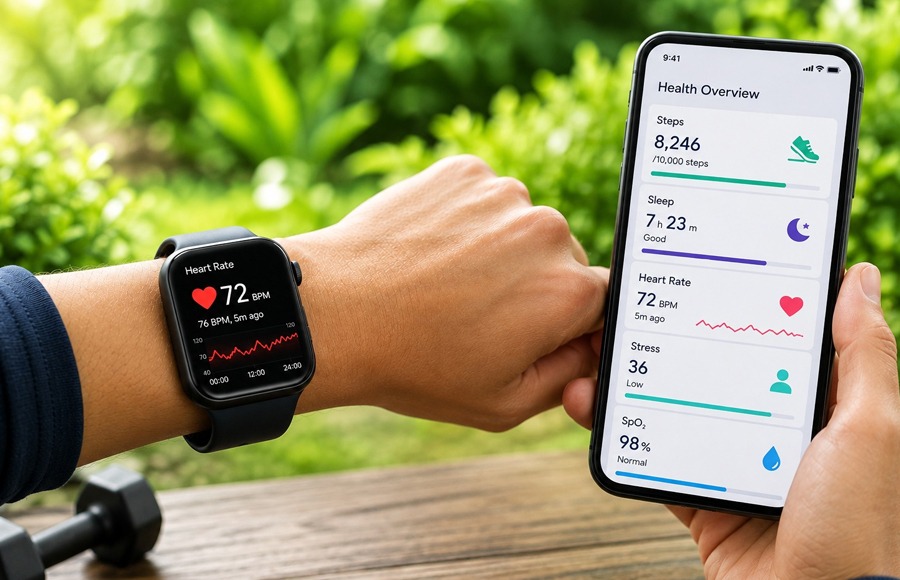

Wearable gadgets have developed considerably more than basic step counters today. As more people wear fitness bands, smart watches smart rings and different gadgets, they can keep an eye on their pulse and different bits of their health day-by-day. The year 2026 is going to witness a variety of sophisticated wearables which make use of extra enhanced sensors, smart innovation, continuous information monitoring. This permits consumers get more vivid insights concerning every day fitness routines.
Especially for the Indian consumer, rising market demand for cheaper smart watches, combined with increasing accessibility to digital wellness platforms, make personal healthcare management extremely affordable for everyone. Nonetheless, many tend to not have a good understanding about precisely what the technology in their gadgets can really measure, how that information can be best used and why a gadget that cannot replace a health expert should.
What Are Wearable Health Devices?
Wearable health technology refers to electronic devices which are designed to be attached to the body and record data about a user’s physical exercise, or pre-selected biological parameters, they range from a number of different categories; such as smart watches, activity trackers, smart rings, to even certain specialised sensors which are all able to record various aspects of user data.
Depending on the type of device it can track; blood rate, user activity, sleep patterns, how long a user is exercising, along with other biophysical signals and the latest and greatest devices will offer warnings, or estimations based on the results shown from what condition can be detected
Continuous Health Monitoring
The great benefit about wearable tech is that data can be recorded all the way through the day and this gives the user insight into long term patterns, not just occasional data readings on certain points of the day. The user can record long term trends for example one might notice a heart rate trend at exercise times of the day, sleep amount changes at times of high stress or there are less activity readings at times of high stress. Reviewing these patterns over the long term may persuade people to take more notice of their lives to live a healthier life style.
Encourages More Physical Activity
The popularity of wearable devices and fitness tracking cannot be underestimated. These devices can urge the user into moving more in their day, in many different ways: by logging steps, encouraging users to move more, recording exercise data and allowing the tracking of fitness activities against specific goals. A sitting user could be urged to get up from his or her chair thanks to movement reminders from a wearable device. However, users do not only use the data generated by wearable devices to count steps. Many analyse these data in order to see their global behaviour patterns and to gently evolve them toward more physical lifestyles.
Better Understanding of Sleep
Another aspect of today’s wearable technology is sleeping tracking. Through wearables, users can get an estimate of their hours of rest and details about the cycles of their sleep. Analysing your sleep cycle can give you insight to which activities might be impacting you in not getting the amount of sleep you need, and give you an estimate of how your sleep cycle is impacted by irregular bedtime, not enough rest, etc.
Nonetheless, users should be made aware that wearable estimations of sleep, rather than directly measuring the activity in your brain, are all based on secondary signals rather than true measurements of your sleep cycles. Recent conversations in wearable technology and the limitations of wearables.
Heart Health Monitoring
Smart watches and wearable devices often track your heart rate throughout the day and during exercise. Several wearable devices include additional features that monitor some types of abnormal rhythms:
Having the wearable might raise consciousness of certain kinds of abnormal patterns; and perhaps may drive an individual seeking medical care if something is felt unusual.
An alarm from your wearable is not a diagnosis from a doctor. Furthermore, an ordinary heart rate is not the guarantee that there is not a health problem.
The Rise of AI-Powered Health Insights
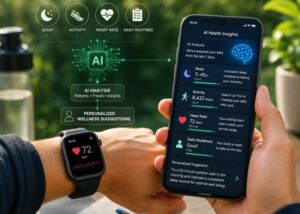
In 2026, AI will be widely embedded in many aspects of wearable health tech. In addition to simply stating various numbers, in the future, combined inputs will be correlated and interpreted.
For example, sleep logs, activity reports, heart rate monitors, and personal lifestyles will be correlated in order to give advice on what to do for better health. It was found in a 2026 study that the more personal data provided by the user in a log and recorded through a wearable gadget could make health-data more meaningful and applicable.
The aim for future wear health technology will not be to present the user with information without explanation but rather with actionable data as there is an aim to ensure the health information collected be user comprehensible.
Supporting Preventive Health
Wearables may provide the catalyst for this trend of shifting health and care provision toward proactive, conscious attention to the body. Instead of attending to one’s own health as a response to an illness-once the symptoms have developed-people begin to have insight into routine day-to-day choices and to notice discrepancies to usual, normal values.
For instance, someone may note that the they are sleep less, or exercise less, or simply exhibiting uncharacteristic behavior regarding their routine physical activity. Such a discovery can motivate better choices in life style, or to have the dialogue to a physician.
Wearables and India’s Digital Health Future
India’s healthcare system continues to move towards a digitalized ecosystem supported by capabilities such as telemedicine, digital health records, and more-the role of the country’s ManTech industry is continuing to be focused on increasing innovation internally and driving India’s digital health initiatives.
Wearables can enhance this ecosystem with on-going lifestyle and physiological information, yet integrating these consumer driven data streams into actual clinical environments is still a hurdle-whether that be in the form of physician understanding of large data sets or the infrastructure to support and implement them.
The Importance of Accuracy
Accuracy is one of the biggest worries concerning wearables devices for health. They operate using various sensors and algorithms, readings of which are susceptible to factors like movement of the device and body, contact on skin etc.
Therefore a number of wearable measurements should always be taken not as final medical figures but as trends and indicators. This is particularly relevant in the case of blood pressure, about which FDA has cautioned consumers regarding certain non-FDA-approved features on wearables that are claiming to provide blood pressure measurements. Such reading may lead to health problems if one tries to administer and treat health conditions accordingly.
Protecting Personal Health Data
It is advisable to check the relevant settings concerning privacy, be sure of how personal data is retained and potentially shared. Selected quality manufacturers, regular updating of connected devices or applications further helps for digital safety. The usage of health technologies needs to facilitate comfort without losing access and ownership over your data.
How to Use Wearables Responsibly
Wearable technology works best as a tool for awareness rather than a replacement for healthcare.
Users can:
- Focus on long-term trends rather than individual readings.
- Use activity data to build healthier habits.
- Discuss concerning or unusual patterns with a healthcare professional.
- Avoid making medication or treatment decisions based only on a wearable.
- Check whether important medical features have appropriate regulatory authorization.
- Protect personal health data through privacy settings.
Conclusion
Wearable healthcare will transform daily health by making Personal health data more available and consistent Wearable technology is transforming daily health by making Personal health data more accessible and consistently available In 2026, with improved sensor capabilities and better AI, wearables can go beyond just monitoring basic activity towards providing personalized health insights to users. For Indians, this will enable fitness promotion, awareness of sleep and lifestyle patterns and augmentation of the digital health infrastructure already being set up in India. While useful, this technology also has limitations and user health data collected by wearable products cannot be substituted for professional advice or medical consultation. For users, the biggest contribution of a wearable is the ability it gives users to understand their everyday health pattern. When supported by a healthy lifestyle, appropriate guidance from professionals, the wearable technology can prove to be very valuable.
Tags
Related Posts




Finance
Emergency Funds Explained: How Much Money Should You Actually Keep Aside?
You never really know when an unexpected expense is going to show…

Travel
India’s New Weekend Economy: How Short Trips Are Changing Travel
What if you did not need a week-long holiday to feel like…

Business
Why Are Indian Companies Investing More in Employee Wellbeing?
A good salary can attract an employee, but it may not be…