Business
The Impact of Automation on Future Business Operations


The world of modern business is evolving rapidly and technology seems to be leading the charge as companies are embracing automation in almost every industry including manufacturing, logistics, customer service and data management with the hopes of gaining competitive advantages, cost savings and efficiencies. As technological innovation grows there is no doubt that we can expect to see an even stronger influence from automation on the operations of the businesses of the future. Automation, in essence, involves the use of technology, software, robotics, and artificial intelligence that perform processes with little to no direct human supervision.
Automation has traditionally been common in the industrial world but today the uses extend to a lot more business areas.
For those businesses that are looking for lasting growth and to maintain a competitive edge it has become important to identify the impact automation has on their current operations and future planning.
What is Business Automation?
Business automation is the process of applying technology in order to automate and automate routine or manually processes in a company that take up a significant amount of time or human effort.
Examples of business automation include:
- Automated inventory management
- Chatbots for customer support
- Payroll processing systems
- Marketing automation tools
- Automated billing and invoicing
- Robotic manufacturing systems
- Data analytics platforms
Instead of manually handling routine tasks, enterprises are free to deploy their manpower to high value activities like strategizing and ideating, thereby increasing their ability to innovate.
Improving Operational Efficiency
Perhaps the most widely cited benefit of automation. Manual operations take time and time often delays things. By automating tasks, you can finish them quickly and repeat ably; for instance, automated software may enter and organize invoices or add data to databases almost instantly, with the additional benefit that businesses will not have to raise staffing and over heads significantly to do a much larger volume of work. This additional speed can translate into improved performance.
Reducing Costs
Automation saves costs in the long run: As with automated processes, the operational costs associated with these can be significantly saved over the course of time after implementing a high, impact installation process with such capabilities.
Cost reductions may come from:
- Lower labor costs for repetitive tasks
- Reduced errors and rework
- Faster processing times
- Less downtime
- Better resource utilization
Businesses who put automation towards high-volume, repetitive tasks often reduce overall operating costs, making them more profitable.
Enhancing Accuracy and Reducing Errors
Human error affects almost any manual business function, whether it’s customer support, invoicing, purchasing, production, or even something as seemingly innocuous as tracking inventory levels. This often results in a variety of issues for businesses ranging from lost sales and profits to reduced customer loyalty.
Automation leads to increased accuracy since predefined rules and workflows are followed on a repeated basis with no chance for user error. Take, for instance, how automated accounting programs prevent errors in the calculation of profits, or how inventory software helps avoid discrepancies in how much stock is actually on the shelf vs what the system is reporting. The more reliable your systems are, the better informed you can make decisions about your business.
Improving Customer Experience
More often than not, automation is becoming part of our customer experiences, and it enhances service and service delivery in customer interactions. Many of the customers expect quicker responses as well as convenience; they expect their customer experiences to be customized.
Businesses use automation to provide:
- Instant chat support
- Automated order tracking
- Personalized recommendations
- Faster checkout processes
- Quick complaint resolution
Bots can now provide 24/7 responses to basic questions, lowering query wait times. These will always have availability to deal with what the client wants. A great user experience makes for more loyal and satisfying customers.
Supporting Better Decision Making
Contemporary Automation Systems Yield Key Business Intelligence for Smart Leaders
Automated analytics systems can monitor:
- Sales performance
- Customer behavior
- Inventory levels
- Market trends
- Financial performance
Managers can spot openings, foresee problems, and promptly adjust to changes thanks to real-time data. Data, driven decision-making provides organizations with the leverage needed to flourish in fast-moving sectors.
Transforming Workforce Roles
Instead of just displacing workers, automation is altering the way work is done.
As repetitive tasks become automated, employees can focus more on:
- Strategic planning
- Creative problem solving
- Innovation
- Relationship management
- Complex decision making
It can free up time and resources for higher, value work-the type of tasks that benefit from our human decision-making, empathy, and creative capacities. It’s up to companies to provide their workforces with training and professional development that positions them for the new set of job responsibilities.
Driving Innovation
Businesses can trial new ideas more effectively. Innovation is sped up by this automation. Because there is less human input on tasks, employees have more time to explore, create, and experiment on the next innovative ideas.
When it’s to trying new products and price structures or even test new business models; companies don’t waste time implementing them with a system like automation.
Automation tends to encourage agile organisations. Those with a high level of innovative innovation fuelled through automation will get more value from their technology and achieve a competitive market edge.
Automation in Different Industries
Automation is impacting nearly every industry.
- Manufacturing: Automation and robotic production lines increase speeds, uniformity, and throughput.
- Retail: Automated checking, inventory, and personalized merchandising offer increased efficiency.
- Medical: Data support through automation reduces patient and diagnosis procedures.
- Finance: Automation in banks assist with fraud screening, threat appraisal, and business exchanges.
- Logistics: Optimized routes and automated distribution facilities help speed up deliveries, as well as improve supply chain activities.
Automation is becoming much more pervasive, and is easily adopted everywhere.
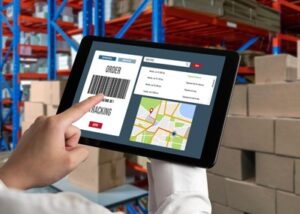
Challenges of Automation
Automation does have its downsides, though.
Common concerns include:
- High implementation costs
- Employee resistance to change
- Job displacement fears
- Cyber security risks
- Dependence on technology
Successful automation projects need businesses to strike a careful balance between the drive for efficiencies, workforce and operational impacts. Leadership support and clear communications, coupled with effective change management strategies, are a key to successful implementations.
The Role of Artificial Intelligence
Artificial Intelligence Speed Up The Future Of Automation. The most popular form of AI allows computers systems learn from existing information and adapt and adjust and change how it works as they are updated. This type of AI can do tasks even more sophisticated.
AI-powered automation can support:
- Predictive analytics
- Intelligent customer support
- Fraud detection
- Demand forecasting
- Personalized marketing
Companies with automation driven by artificial intelligence are more apt to have advantages with regard to market advantages. Artificial Intelligence Will Further Boost the Power of Automation. AI’s power to transform industries is only expected to skyrocket.
Preparing for the Future
Companies need to get ahead of increasing levels of automation if they want to compete with others that already have this type of workforce already in place.
Important steps include:
- Identifying automation opportunities
- Investing in technology infrastructure
- Training employees
- Strengthening cyber security
- Building adaptable business models
Organizations that embrace change and continuously learn are more likely to succeed in an automated future.
Conclusion
In an era of constant business disruption, the need for businesses to do business efficiently, affordably and with greater accuracy and improved customer care is constant. As technology progresses and development continues to accelerate, businesses will only become more reliant on Automation for business and beyond. Although there are challenges with adopting this technology, the opportunities presented through automation continue to grow by far in size and complexity for each business on all levels. Ultimately, the successful businesses will leverage the opportunity and help staff grow and adapt into the increasingly automated future.
Tags
Related Posts




Real Estate
The Next Phase of Rental Housing in India: How Institutional Landlords Could Change Urban Living by 2027
The market for rental housing in India is evolving and entering a…

Health
The Importance of Healthy Posture for Preventing Everyday Back and Neck Pain
Back and neck pain are common afflictions in today’s world. Sitting at…

Finance
How India’s Corporate Investment Revival Could Create New Opportunities for Investors
India is about to hit an important milestone; private companies are starting…