Finance
The Financial Success of Amul: Lessons from India’s Largest Dairy Cooperative


Amul is one such truly remarkable business success story that emerged out of India. From humble beginnings as a cooperative movement in western India’s Gujarat, it rose to become India’s largest dairy brand. It revolutionized the Indian dairy industry and uplifted millions of farmers simultaneously. The success story is not only built upon financial performance but on innovation, cooperative growth, rural development, and sustainability.
Amul’s story provides important lessons to entrepreneurs, investors and business leaders on how a mission with clear goals, efficient execution and customer trust can build a business that lasts and thrives.
The Beginning of Amul
Amul was born in 1946 in Anand, Gujarat when the farmers selling their milk were at the mercy of private traders and middlemen who exploited them and paid them very little while selling the milk at exorbitant prices to the consumer.
In order to address this issue, a cooperative movement was started wherein the farmers grouped themselves together; eliminating the need for middlemen, and started getting a fair payment for the milk they produced. Tribhuvandas Patel was the founder leader of the cooperative, while Dr. Verghese Kurien championed the movement later. Thus began a business that was built around both the interests of the farmers and the consumers.
The Cooperative Business Model
Amul’s tremendous financial success is built on its unique business model, the cooperative business model.
Corporations are generally businesses owned by their shareholders and strive to maximize profit at all costs. Amul is farmer-owned. The cooperative business is composed of millions of dairy farmers supplying milk to the organization. The benefits of the cooperative business model are many:
- Paying fair prices to the farmers
- Stabilizing the milk supply for the organization
- Reducing reliance on intermediaries
- Sharing wealth more equitably
- Gaining control over the entire supply chain
A natural trust is thus embedded within the system since the producer of the commodity is also a stakeholder in the business.
This cooperative model was the foundation upon which Amul flourished in India.
Revolutionizing India’s Dairy Industry
Before Amul, India was facing serious milk shortages, had low milk yields, and had to import large amounts of milk. Amul, however, played a major role in changing this scenario and initiating the White Revolution or Operation Flood. The aims of Operation Flood were:
- To boost milk production
- To improve the dairy infrastructure at rural levels
- To improve the quality of fodder
- To establish the cold storage chain
- To link farmers to the markets
The subsequent increase in milk production meant that India was no longer in short supply and became the world’s largest producer of milk. The success of the cooperative was undeniable in this remarkable transformation and became a force to be reckoned with in India’s agricultural economy.
Building a Strong Brand
It is unfair to attribute Amul’s success only to its scale of production and capacity. Branding has been a huge part of its financial success.
Amul has been recognized for producing:
- High quality dairy products
- Affordable goods
- Consistent product availability
- Iconic advertising campaigns
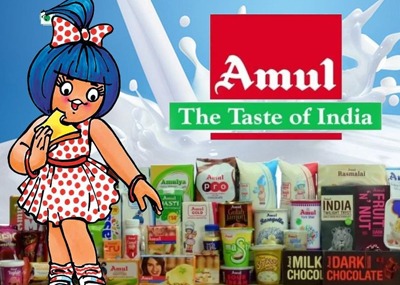
The ‘Amul Girl’ quickly became one of the most popular and recognizable advertising icons in the country. The topical, humorous and socially relevant advertisements created by Amul over decades have helped keep the brand relevant, building deep consumer trust among Indian households and helping them associate Amul with quality dairy products.
Product Diversification
The dairy cooperative did not stop at producing just milk but expanded its operations into a variety of other dairy products.
The company currently sells a vast range of products including:
- Milk
- Butter
- Cheese
- Ice-cream
- Yogurt
- Paneer
- Chocolates
- Flavoured milk
This strategic move allowed the organization to create various streams of income, diversified its risk and provided a strong presence in both rural and urban markets. This is a significant financial lesson that shows how diversification helps an organization maintain stability and grow in any market condition.
Efficient Supply Chain Management
Another very significant factor for Amul’s success has been the company’s highly efficient operations. Milk is a highly perishable commodity, thus making the supply chain management critically important. Amul was able to establish an efficient and effective supply chain that connects its millions of farmers with the processing plants and retail stores at the end.
The important elements of Amul’s supply chain:
- Daily collection of milk from farmers
- Cold storage facilities at collection centers and processing plants
- Rigorous quality testing
- Fast distribution and logistics
- Efficient transportation network
The rapid delivery ensures that fresh products reach consumers in a timely manner, thus minimizing loss and spoilage and maintaining the quality of the milk. Strong operational efficiency thus helps Amul scale efficiently without compromising its quality and hence profitability.
Empowering Rural India
Amul’s success is deeply rooted in rural development and is dependent on the socio-economic upliftment of millions of small-scale farmers. The cooperative provides them with a continuous stream of income, empowering them to improve their livelihoods. Amul has supported rural farmers by:
- Providing a stable income source
- Empowering women through cooperative involvement Fostering rural entrepreneurship
- Raising the standard of living in rural India
Amul’s network transformed dairy farming into the primary source of livelihood in numerous villages across India. This proves that financial growth does not have to compromise social impact and vice-versa.
Competitive Pricing Strategy
The company has also been smart about its pricing. Amul has successfully managed to achieve the delicate balance between keeping the price of its products affordable to consumers and offering a fair price to its farmers along with ensuring its own profit margins. This is a feat that most companies cannot achieve and demonstrates the financial acumen of the Amul model that delivers value to every stakeholder. The consistent cost efficiency and large scale of operations enable Amul to offer a very competitive price compared to global giants and provides a lesson on business value creation for everyone in the supply chain.
Adapting to Changing Consumer Demand
Over the years, the Indian consumer has evolved with increasing urbanization, growing awareness about health, and changing lifestyles. Amul has successfully kept pace with this by responding with a host of innovative products targeted to meet these demands. These include:
- High protein and low fat dairy products
- Ready to drink beverages
- Premium ice cream variants
- Modern packaging designs
The company has continuously adapted to market demands, thereby ensuring sustained growth over the years and reinforcing the business lesson of adaptation for survival and growth.
Financial Lessons from Amul’s Success
There are a number of critical financial lessons that can be learned from Amul’s journey:
- A strong purpose generates long-term success: businesses with a clear mission have a greater capacity for long-term customer loyalty and growth.
- Achieving scale leads to better profit margins: large-scale operations increase efficiency and can substantially reduce costs, thus allowing companies to be profitable.
- Brand trust is invaluable: building consumer confidence over years and ensuring quality of products will ensure repeat sales and long-term revenue streams.
- Product diversification is key for risk management: maintaining diverse product lines, especially across different product categories, helps in mitigating business risks and ensuring a stable income for the company.
- Social impact leads to financial growth: Businesses that create tangible benefits for their communities can strengthen their overall financial performance.
Conclusion
Amul’s financial success story is one of the most inspiring business sagas of India. Starting as a small cooperative in Gujarat, it has transformed into the nation’s largest dairy brand, revolutionizing the Indian dairy sector and benefiting millions of farmers. Amul’s story is a clear testament that with a focused vision, efficient operations, and community driven development, extraordinary business results can be achieved. The Amul model proves that profitability and social welfare can go hand in hand. It has changed the Indian dairy sector and positively touched the lives of millions through empowering its farmers, building customer trust and continuously innovating. For all entrepreneurs, investors and business leaders, Amul is a shining example of what success founded on trust and collective effort can achieve.
Tags
Related Posts




Health
The Importance of Healthy Posture for Preventing Everyday Back and Neck Pain
Back and neck pain are common afflictions in today’s world. Sitting at…

Finance
How India’s Corporate Investment Revival Could Create New Opportunities for Investors
India is about to hit an important milestone; private companies are starting…

Business
The Next Industrial Opportunity in India: Building Businesses Around Semiconductors, Space, Electronics and Solar
India’s industrial economy is entering a new phase. While traditional manufacturing remains…