Finance
Digital Gold vs Physical Gold: What Indian Investors Should Know Before Buying
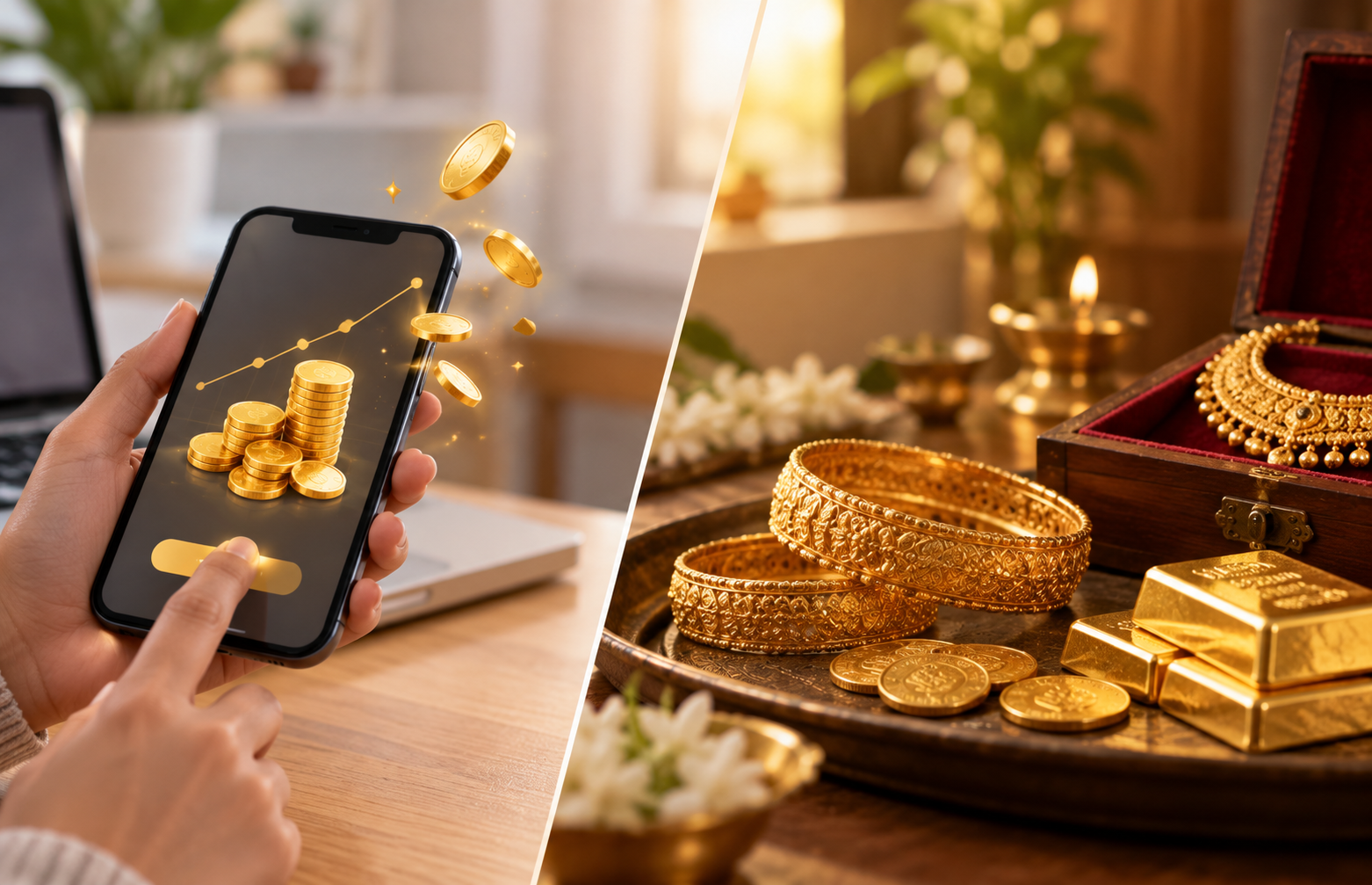

Gold has always had a special place in Indian households. It can be jewellery passed down through generations, coins bought during festivals, or savings quietly accumulated over time.
But the way Indians buy gold is changing. In 2025, India’s gold investment demand reached 280.4 tonnes, up 17% from 2024, according to the World Gold Council. Digital gold is also gaining traction, with purchases through UPI nearly tripling during the year.
So, should you buy digital gold or physical gold?
The answer depends less on which one is better and more on what you want the gold for.
Digital gold: Gold without the jewellery shop
Digital gold lets you buy small quantities of gold online without physically storing it yourself. You can purchase it through your phone and gradually build your holding.
Its biggest advantage is convenience.
The World Gold Council estimates that digital gold purchases through UPI increased from ₹8 billion in January 2025 to ₹21 billion in December 2025, with an estimated 13.5 tonnes purchased during the year. But there is an important distinction buyers need to understand.
Digital gold is not the same as a regulated gold investment product
In November 2025, SEBI cautioned investors that digital gold products offered by online platforms are not securities or commodity derivatives regulated by SEBI. They operate outside the securities-market regulatory framework, meaning SEBI’s investor protection mechanisms do not apply to them.
This doesn’t automatically make digital gold unsuitable. It means investors should understand what they are buying, who holds the gold and what protections apply.
Digital gold can also be confused with products such as Gold ETFs, but the two have different structures and regulatory frameworks.
Physical gold: More than an investment
Physical gold gives you something digital gold doesn’t like direct possession.
You can buy jewellery, coins or bars and physically hold the asset. For Indian families, that can also give gold a purpose beyond investment. Jewellery can be worn, gifted or passed down.
But physical gold has its own costs. Jewellery can include making charges and other costs that don’t directly reflect the value of the gold. Storage and security are also your responsibility, and resale prices may differ from what you originally paid.
Purity is another important consideration.
The Bureau of Indian Standards says hallmarking provides third-party assurance of gold purity. Hallmarked jewellery carries the BIS logo, purity/fineness mark and a six-digit HUID number, which buyers can verify through the BIS Care App.
Don’t overlook taxes and costs

Gold isn’t simply about the price displayed when you buy it.
You need to consider GST, making charges where applicable, delivery or storage costs, buying and selling spreads, and the price offered when you redeem or sell.
Tax treatment also matters. Under current rules, gold held for more than 24 months is generally treated as a long-term capital asset, with long-term capital gains taxed at 12.5%. Holdings of 24 months or less are generally treated as short-term and taxed at applicable slab rates.
Tax rules can change, so investors should check the rules applicable when they actually sell.
Four questions to ask before buying
- Why am I buying gold?
Want jewellery or physical possession? Physical gold may serve that purpose. Want convenient small-value purchases? Digital gold offers that flexibility. - What am I actually paying?
Look beyond the gold price and check GST, making charges, spreads, delivery costs and redemption terms. - Who holds the gold?
For digital gold, understand the provider, custodian, storage arrangement and what happens if the platform stops operating. - What protection applies?
Don’t assume every gold product you see on an investment app has the same regulatory framework. Digital gold and Gold ETFs, for example, are structured differently.
The bottom line
India’s relationship with gold isn’t disappearing. It’s evolving.
The shift is visible in the numbers. In Q1 2026, investment demand for bars, coins and Gold ETFs rose 54% year on year to 82 tonnes, while jewellery demand fell 19%, according to the World Gold Council.
For buyers, the choice between digital and physical gold ultimately comes down to purpose, convenience, costs, ownership and the protections attached to the product. Before buying gold, don’t just ask how much it costs. Ask what you’re buying, who holds it, what it costs you and what protections actually apply.
Tags
Related Posts




Health
Gut-Brain Connection: How Digestive Health Can Affect Mood and Everyday Wellbeing
Have you ever experienced a nervous stomach before an important meeting or…

Business
Why Indian Businesses Are Rethinking Customer Loyalty in the Age of Quick Commerce
For years, customer loyalty in India was built around familiarity. You went…

Travel
Slow Travel in India: Why Travellers Are Choosing Longer, Deeper Trips Over Packed Itineraries
There was a time when a good holiday in India came with…