Real Estate
The Rise of Electronic City, Bengaluru: How the IT Boom Created a Real Estate Hotspot

From a planned industrial township to a desirable destination. The region in South Bengal Electronic City, over 800 hectares, that was once envisioned as an industrial district has, by now, burgeoned into one of the prime residential hotspots in the country. It plays hosts to major IT companies, Multinational Corporations (MNCs), start ups, institutions, etc. And also contemporary residential enclaves. In fact, due to the rise in the IT sectors for about thirty years, growth of employment and real estate has happened concurrently here. Electronic city today has attracted investors, realtors and IT professionals from all over the nation, transforming it to an active real estate market in Bengaluru.
The Beginning of Electronic City
Electronic City India’s first and largest electronic industrial zone Located in the southeast suburb of Bengaluru, Electronic City was set up in the late 1970s by KEONICS. The project aimed to set up exclusive and integrated areas specifically for the electronic and technology industries and provide a stimulus to electronics manufacturing. Electronic City really took off when India’s IT industry exploded in the 1990s. With exports of software gaining speed and overseas software giant started injecting cash into India; there was demand for prime IT locations. Electronic City became a haven for these tech companies, partly because it was designed so, and partly due to large plots of land being available at attractive prices.
The IT Boom That Changed Everything
With many big names of the Indian IT industry Infosys, Wipro, Tata Consultancy Services, HCL Technologies, Tech Mahindra and other multinational firms setting up massive complexes at Electronic City, it developed into one of the biggest tech hubs of the country. With a sizeable population of IT professionals being employed in this region, there has been robust demand for housing complexes, office spaces, retail centres, restaurants, hospitals and schools and colleges. With rise in jobs, the inflow of people to Bengaluru enhanced considerably which resulted in considerable growth in residential projects on and around Electronic City. Steadily growing IT industry ensured continuous demand of houses both for rent and buying making Electronic City a favourite with investors.
Infrastructure Development
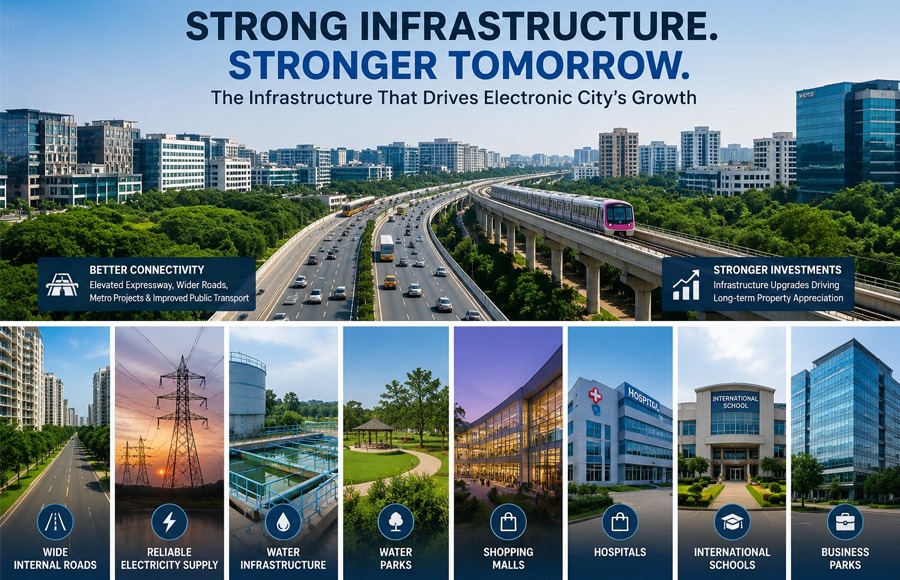
Electronics city infrastructure has immensely contributed to its growth The Elevated Expressway linking it with core of Bangalore has not only helped to slash the commute time it further boosted the growth of electronics city to accommodate more population. Expanding of major roads, increase in public transportation, and the metro connectivity has increased its desirability.
Modern civic infrastructure now includes:
- Wide internal roads
- Reliable electricity supply
- Water infrastructure
- Public parks
- Shopping malls
- Hospitals
- International schools
- Business parks
Continuous infrastructure upgrades have strengthened investor confidence and supported long term property appreciation.
Growth of Residential Real Estate
As employment opportunities expanded, developers launched numerous residential projects catering to different income groups.
Electronic City now offers a wide variety of housing options, including:
- Affordable apartments
- Premium apartments
- Luxury gated communities
- Villas
- Plotted developments
- Rental housing
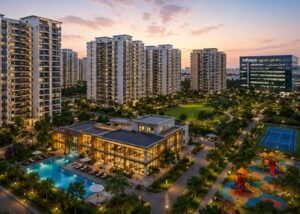
Most residential communities have modern amenities like clubhouses, swimming pool, gymnasium, landscaped parks, kid’s play zones, jogging tracks and 24-hour security systems to give you a world class lifestyle at the ease of your doorsteps. Young Professionals typically wish to opt for apartments nearest to their place of work, which in turn saves on the traveling time and ensures better work life balance.
Commercial and Retail Expansion
Electronic city doesn’t only provide IT space commercial growth is evident from the emergence of numerous retail outlets, shopping complexes, supermarkets, restaurants and cafes, hotels and entertainment zones have bloomed over the period in parallel to residential growth. Various business parks have attracted numerous MNCs, start ups and technological companies. The synergy of residential and commercial development gives Electronic city a self sustained character of urban living within a limited area, wherein citizens can reside, work, shop and entertain themselves within their own neighbourhood.
- Why Investors Prefer Electronic City: Electronic City remains a preferred destination for real estate investors due to several key factors.
- Strong Rental Demand: Working population Thousands of professionals working for the nearby IT Companies. These always create high demand for rental properties throughout the year.
- Long Term Appreciation: The property market has maintained gradual steady appreciation over time due to its constant improvement in infrastructure coupled with constant growth in jobs, the market is assured of consistent upward momentum going forward.
- Diverse Property Options: The area has everything from cost effective starter homes for first time buyers up to luxury high end properties and so there is potential for investments at all price points and from all budgets.
- Excellent Connectivity: Availability of a superior transport network including a Metro and proximity to all major commercial zones are key to making Electronic City a sought after residential area.
- Stable Employment Base: Many existing IT firms create economic stability and also demand a durable property market demand.
Challenges Facing Electronic City
Even with its tremendous progress, Electronic City is not without its share of urban challenges. The increase in office population has led to a rise in congestion levels during prime office hours, but infrastructure developments underway should help ease up mobility in a bit of time. Urbanization has accelerated pressure on the existing water infrastructure, waste management system, and public utilities. Well structured smart cities and sustainability must govern the city to handle future growth.
Future Growth Prospects
Prospects for Electronic City; Electronics city is all set for a promising future. With adequate support for metro, road infrastructure and commercial projects, it’s certain to solidify its position among Bengaluru’s top technology and residential addresses. The influx of more GCC, technology start ups, artificial intelligence companies and research and development organisations, will create more job roles, ensuring a steady influx of residents in the vicinity, thereby creating constant demand for quality housing and commercial space. In the wake, property developers are investing more into environment friendly, eco sustainable constructions, smart home technology, efficient energy usage and townships development for catering to modern buyers’ tastes and demands.
Conclusion
The transformation of Electronics City from its origins as a planned industrial estate to India’s most coveted technology hub and realty hotspot is a clear illustration of how economic success catalyses urban development. Apart from creating millions of jobs, this revolution spawned thousands of housing colonies, workplaces, high end markets, and ultramodern infrastructure. In future, with enhanced connectivity, stable demand for housing, on going upgrades in infra, and a resilient, strong employment scenario, it shall prove itself to be the most sought after property hotspot. As the city is set to emerge as the tech capital, these opportunities won’t fade soon.
Tags
Related Posts



Real Estate
The Next Phase of Rental Housing in India: How Institutional Landlords Could Change Urban Living by 2027
The market for rental housing in India is evolving and entering a…

Health
The Importance of Healthy Posture for Preventing Everyday Back and Neck Pain
Back and neck pain are common afflictions in today’s world. Sitting at…

Finance
How India’s Corporate Investment Revival Could Create New Opportunities for Investors
India is about to hit an important milestone; private companies are starting…