Real Estate
How Real Estate Developers Are Designing Communities for Remote Workers


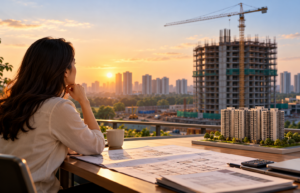
Developers have seen this shift and begun to design and build homes and communities catered specifically to these remote workers. This trend moves beyond just providing a “place to live” and is now about building “an environment, in which residents can live, work, play and relax in the same place”.
Here is how developers are beginning to design communities for remote workers:
Transition in working, and homes must change with it.
Due to the pandemic, many companies made a shift to a remote or hybrid working environment and have continued with this plan. This change has also drastically shifted what buyers and renters look for in their homes:
Larger homes
- Peaceful environments
- Good internet connectivity
- Adaptable designs and spaces
- On-site amenities
Responding to these new desires, developers have begun to change the style and feel of their communities.
Home offices become standard
One of the most important home design change geared towards remote workers is the home office built into these homes. This will give remote workers the space they need to take phone calls and perform work from a comfortable, quiet, and functional space. Multiple home offices will be included in each home (not just one or two studies as in previous homes), with a multitude of options such as integrated home office corners, versatile work spaces, soundproof rooms for calls, media rooms and rooms designated for creative thinking and work space in small apartments.
Co-working space in residential developments
Within the residential developments there will be a common co-working space where residents can do their work instead of in their homes. This co-working space would likely provide reliable high-speed internet, individual work stations that could be rented, private offices, meeting rooms with the required equipment for professional meetings, printer services, and business lounges. All these amenities are beneficial to a remote worker/freelancer/entrepreneur.
Reliable digital infrastructure
High-speed internet has gone from a luxury to a basic need, at the very least comparable to the need for water and electricity. Installing at least one reliable high-speed broadband connection is now the minimum for all new residential developments. New communities are built with two separate internet providers available to each resident, including wi-fi, and other smart home technology. These communities will also always have power due to the inclusion of generators that allow for basic amenities in times of electricity cuts.
Multi-purpose rooms
Because people are struggling with blurring the lines between work life and family life at home, the need for adaptable and multi-purpose spaces is high and people expect to see it in new homes. Rooms can be expected to be adapted from any function to another function, such as a bedroom to an office, or to have the ability to be turned into other types of rooms with the help of modular furniture, such as open-plan rooms. The use of a multi-purpose room is also beneficial in small apartments where real estate space is very limited.
Focus on health and well-being
As a lot more time will be spent inside homes for work, health and well-being amenities have become a top priority in the development of these communities. These include features such as a fitness room, yoga room, outdoor paths and roads for walking and biking, a meditation room and plenty of gardens and open space for residents to relax. All these features give residents the opportunity to remain active while at home for their jobs.
More green and open spaces
As everyone working from home can see, it is nice to get outside once in a while. For this reason many new communities offer community parks, rooftops with terraces for outdoor sitting space, paths for walking, and plenty of green lawns where people can play or sit.
Increased demand for mixed-use developments
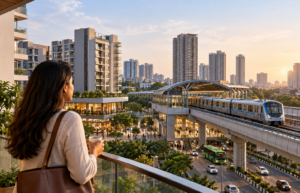
As the need to be close to work is reduced, people will be happy to settle into neighborhoods where they can walk to restaurants, shops, doctor’s offices, and grocery stores. Developers are building more mixed-use developments that will feature apartments or homes for rent/sale that allow people to walk from their homes to areas designated for shops, restaurants, medical facilities and grocery stores. The “live, work, and play” atmosphere of these communities will be desirable to residents.

Growth in suburban areas and secondary/tier 2 cities
Now that workers no longer have to commute to work each day, many remote workers are now moving out of major cities and into smaller towns and suburbs. These people are able to purchase bigger homes at lower prices in these towns. Buyers and renters in these towns are going to find a lot of the same amenities that they previously experienced living in large metropolitan areas such as Wi-Fi and smart technology included. Many of these tier 2 and 3 cities that will be a hub of remote workers include Jaipur, Indore, Coimbatore, Chandigarh and Lucknow.
Smart Home Technology integrationBeing at home for majority of the day, the need for smart home features have become extremely relevant and practical for workers at home. Some common smart home technology includes smart voice-activated assistant integration, smart lighting and temperature controls, video doorbells, security features and many more for comfortable work.
The Future of remote-work communities
In the future, there will likely be an even greater specialization in these communities with an emphasis on extremely high-tech business centers, and virtual reality meeting rooms. As smart home technology becomes more and more advanced, fully automated homes with AI and better high-speed connectivity will surely come into use for more comfortable work, eventually completing the integration between work and life.
Conclusion
The phenomenon of the remote worker will forever change the real estate market as buyers and renters want to purchase homes that are equipped with high-speed internet, business centers, smart home technology and features that mimic a wellness center in order to maintain a balanced lifestyle. With the popularity of the remote work situation steadily increasing, homes like these will continue to grow in popularity and change the way we live for good.
Tags
Related Posts


Sports
How Sports Leagues Are Creating New Career Opportunities Beyond Athletes
Sports leagues are no longer defined solely by the athletes competing on…
Travel
How Railway Journeys Are Becoming Part of the Travel Experience Again
There was a time when a train journey was simply a way…
Business
The Subscription Economy: Why We’re Paying Monthly for Everything
Remember when buying something meant paying for it once and using it…