Sports
How Hockey Turf Technology Is Changing the Speed and Style of Modern Hockey
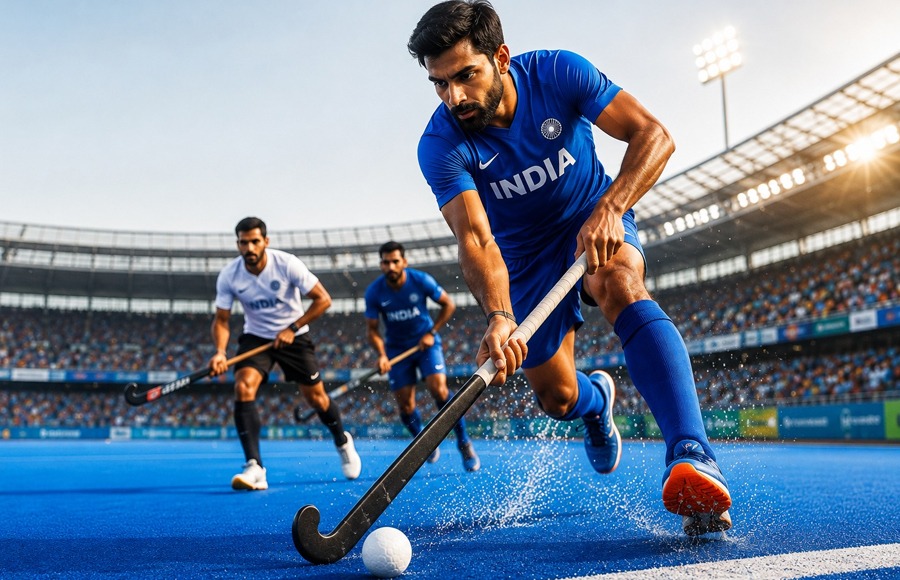

Over the past decades hockey has witnessed remarkable changes. While conditioning of the players, nature of training-coaching, equipment, game plans-they all are important part of those changes, perhaps the most significant changes have occurred from the surface below the players’ shoes – which is the modern hockey turf.
Playing surface of hockey effects speed of the ball, skills of receiving the ball with precision and its control as well as execution of pass of desired accuracy along with initiation and execution of attacking moves. Hence, modern turf is nothing other than its replacement. Artificial modern turf has thus turned out to be part of development into the quicker and the technologically sound as well as strategically sophisticated game.
Modern turf has made a significant contribution to train aspiring and young player not playing countries like India, and tournament.
From Natural Grass to Artificial Turf
The way that traditional hockey was played was a good sport for grassy field games. Although grass was a common surface for many sports games at the time it was also difficult to maintain to a level playing condition, depending on weather, moisture and maintenance. The ball could bounce in unexpected directions on an uneven surface, resulting in difficult rapid passes with the ball. Rain can take a particular turn for the game in general.
The introduction of Astro Turf or fake grass for hockey games brought a more stable playing surface. Players began working on more consistent passing skills and greater control as you knew where and how fast the ball was travelling. International level hockey became a greater challenge which gave importance to the need for Astroturf on many pitches around the world.
How Turf Makes Hockey Faster
Perhaps one of the most obvious features of the modern game to see is pace. The speed at which the ball moves at is accelerated on a good quality artificial surface. Balls can be hit from the back of the court to the front within a couple of passes as attack simply unfolds within a couple of seconds of the ball turning over.
This means the pace of the game is faster as the amount of time available to defenders is compressed; hence anticipating skills, reading the play, positioning, support play and the ability to communicate becomes even more important.
It also means defending errors on a hard surface are met more swiftly, while on attack those chances become available more regularly to break down passive defence.
Water-Based Turf and Ball Control
Water-based turf is one type of high-level specialized synthetic turf used in modern elite hockey to achieve reliable ball travel. Water-based turf can assist to decrease the friction between ball and turf, can provide the ball a steady travel. The surface also encourages the close control and accurate quick pass of the ball.
Especially for players who possess technical skills.
Receiving the ball, passing to eliminate the opponent, dribbling and short passes can be successfully done smoothly more time with same playing field. The ball therefore can run on with same condition on the field and the player may focus more on technique and tactical thinking.
Changing Passing and Attacking Styles
The game is now shaped by the way we can play on a synthetic field. Short combinations of passes and the quick movement of the ball and change of direction have replaced a reliance on runs of the ball from players. Movement and passing in combination play dominate possession based teams, not individual runs.
It means that players must always be looking to find a pass and provide their team-mates with a pass, with the midfielders looking to move the ball swiftly whilst attackers see the space and make sensible runs.Thus quick turf demands teams of high technical ability and smart tactics.
The Rise of Quick Transitions
Modern turf also means a team can go from defence to attack quicker after change of possession. Once possession is regained you can launch an attack straight back down field, for example if a midfielder gets an interception on your opponents half it is on a possible transition play immediately after with seconds. This has led to the growth in the importance of transition players capable of receiving the ball in pressure and playing a decisive pass. Defence also has to react faster after lost possession, team too slow to get into structure are vulnerable.
Impact on Player Skills
The modern playing surface has influenced the technical skills expected from hockey players.
Young players increasingly need to develop:
- Quick first touches
- Accurate passing
- Close ball control
- Fast decision-making
- Agility and acceleration
- Spatial awareness
- Strong defensive positioning
Since the ball can travel at a high speed, most of the players are used to think before touching it. It is to a great advantage, if he knows, before the ball comes to him, where it is to go to next. Hockey is now a game that takes both great physical fitness and a lot of technical skill.
How Turf Has Influenced Indian Hockey
One has to feel for this generation of Indian hockey payers especially, with all their lives being played on the natural surfaces when the game then moved to Astroturf and here it seems they really had to work harder to be better suited, to learn a new brand of passing and defending, as the Indian game has all ways been that of individual expression the fine foot work and skills are what it is, but the turf requires, a more compact unit passing more tightly and systematically.
As the international game these days are all played with superior turf, which does demand some more skill the Indian boys would have gained from playing on that surface and may now be closer to it by practicing it.

Turf and Player Fitness
Faster hockey also places increased physical stresses on the player. Players often need to make explosive movements, explosive turns, get to the empty ice, and quickly recover from efforts at high intensities. The faster speed of the game also demands more from conditioning.
Modern training in hockey often focuses on a blend of skating and technical drills, as well as speed and agility work, strength, endurance and recovery.Maintain the turf appropriately-it may also cause additional stress.
Technology Beyond the Surface
More hockey facilities are starting to use technology in combination with the turf. Systems of high tech field care manage playing conditions; there are now performance analyses tools that help coaches look at the players’ passing tactics, their movement and ball possession as well as their game. Through video you can see team-space-management at high-paced conditions and opportunities on field as well as places where you lose ball. Along the improved field care and ball-handling more detailed practice programmes emerge, as coaches look deeper into play and movements within team playing.
Sustainability and the Future of Hockey Turf
With a growing level of environmental awareness within the sports facility sector, sustainability is emerging as a significant factor for turf production.Water usage will also have to be a consideration in relation to water-based fields and producers and facilities are looking at improving efficiencies and life of playing surfaces. Maintenance, consistency and lower environmental impact may become a major focus of turf systems in the future. The overall balancing of elite sport performance with stewardship needs to be taken into account.
Conclusion
Hockey turf technology has truly revolutionized the modern game. Whether it’s the speed and predictability of the surface, a quicker distribution, more incisive and consistent handling, faster transition play and a rise of tactical complex-systems. For players it requires precision and technique allied with speed, dynamism and awareness and decision-making skills. For coaches it presents a need for training to meet and beat players able to create advantage from anything in a matter of seconds. As turf technology further improves, the game is set to get ever faster and technically more demanding. Today, the turf is not just the field hockey’s pitch but itself a component part of its design, development and performance.
Tags
Related Posts

Travel
How Railway Journeys Are Becoming Part of the Travel Experience Again
There was a time when a train journey was simply a way…

Business
The Subscription Economy: Why We’re Paying Monthly for Everything
Remember when buying something meant paying for it once and using it…

Real Estate
What Is a Pre-Launch Property? Things Buyers Should Know Before Investing
Imagine finding a property at a price lower than what the developer…