Finance
What Is a Credit Score Really Made Of? Understanding the Factors That Affect Your CIBIL Score


What affects your CIBIL Score, and how can you improve it? CIBIL stands for Credit Information Bureau (India) Limited. Your credit score is more than just a three-digit number. It reflects how you have managed credit over time, including your EMI and credit card payments, outstanding balances, credit utilization, and recent loan or credit card applications.
In India, lenders may use your CIBIL Score when assessing your eligibility for credit. The score ranges from 300 to 900 and is calculated using information in your CIBIL Report, especially your account and enquiry history.
Understanding the factors that affect your CIBIL Score can help you make informed borrowing decisions, identify errors early and manage your credit more responsibly. Read the full blog to learn how payment history, credit utilization, credit history length and credit enquiries influence your score.
What Is a CIBIL Score?
Your CIBIL Score, provided by TransUnion CIBIL, is a three-digit summary of your credit history. CIBIL stands for Credit Information Bureau (India) Limited. Your score is based on information reported by banks and financial institutions, including your loan accounts, credit cards, repayment behaviour, outstanding balances and credit enquiries.
While lenders consider several factors when assessing a credit application, your credit score gives them a quick view of your past credit behaviour.
So, if you want to know CIBIL score information that actually helps, it is important to understand what sits behind the number.
1. Payment History
Your repayment behaviour is one of the most important parts of your CIBIL profile.
Missing an EMI or paying a credit card bill late can negatively affect your score. Your CIBIL Report records payment information and can show whether payments were made on time, delayed or missed.
This is why setting up reminders or automatic payments can help you avoid accidentally missing a due date.
2. Credit Utilization
Credit utilization refers to how much of your available credit you are using, particularly on credit cards.
For example, if your total credit limit is ₹1 lakh and your outstanding balance is ₹50,000, your utilization is 50%.
Consistently using a large portion of your available credit can indicate higher dependence on borrowed money and may negatively affect your CIBIL Score. CIBIL recommends keeping balances under control rather than routinely using your entire available limit.
3. Age of Your Credit History
How long you have been using credit also matters.
A longer history gives lenders more information about your borrowing and repayment behaviour. Your CIBIL profile includes details such as when accounts were opened and their repayment history.
This does not mean you should take a loan simply to build a longer credit history. Responsible use of existing credit is more important.
4. Credit Enquiries
Every time you apply for a loan or credit card, the lender may access your credit report. These accesses are recorded as enquiries.
Multiple applications within a short period can affect your CIBIL Score because they may indicate that you are seeking additional credit.
That is why it is better to apply for credit selectively rather than submitting several applications at once.
Does Checking Your Own CIBIL Score Reduce It?
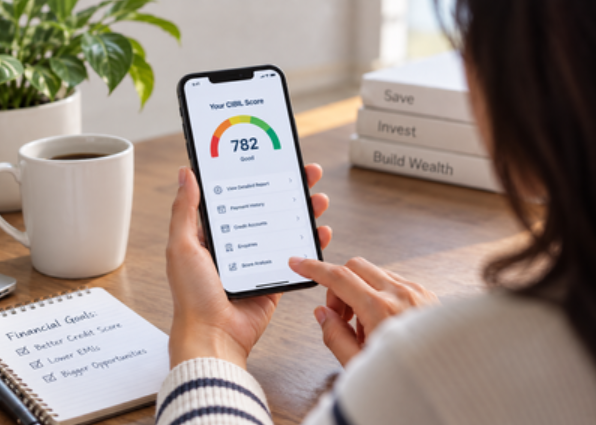
No. Checking your own CIBIL Score is considered a soft enquiry and does not reduce your score. In fact, regularly reviewing your credit report can help you identify incorrect information or unfamiliar accounts.
You can check CIBIL score for free directly through TransUnion CIBIL. Under the current system, individuals are entitled to one free CIBIL Score and Report each calendar year.
If you want to find CIBIL score, view CIBIL score, or complete a CIBIL score check, use the official CIBIL platform rather than relying on unverified sources.
Why Your Credit Report Matters
Your score is only one part of your credit profile. Your credit report contains detailed information about your accounts, payment history and enquiries.
If you check CIBIL regularly, you may notice incorrect account details, outdated payment information or credit enquiries you do not recognize. Identifying such issues early gives you an opportunity to raise a dispute with the relevant credit institution or CIBIL.
Conclusion
Your CIBIL Score is shaped by your credit behaviour over time. Paying dues on time, keeping credit utilization under control, maintaining a healthy credit history and avoiding unnecessary credit applications can all support responsible credit management.
So, rather than focusing only on the number, understand the habits behind it. A regular credit score check and a careful review of your CIBIL Report can help you stay aware of your financial profile before you apply for your next loan or credit card.
Tags
Related Posts




Business
The Rise of Micro-Entrepreneurship in India: How Small Creators Are Building Real Businesses
A creator with a phone, a niche audience and a good idea…

Real Estate
The Next Phase of Rental Housing in India: How Institutional Landlords Could Change Urban Living by 2027
The market for rental housing in India is evolving and entering a…

Health
The Importance of Healthy Posture for Preventing Everyday Back and Neck Pain
Back and neck pain are common afflictions in today’s world. Sitting at…