Entertainment
How Virtual Reality Is Transforming the Future of Entertainment in India
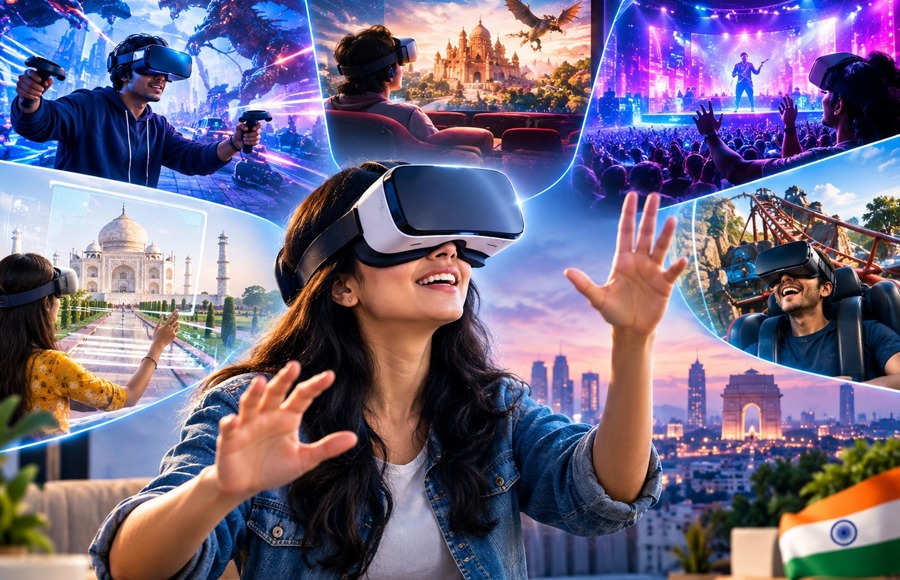

VR is one of the most engaging technologies that are going to mold India’s future entertainment scene. VR leverages stereoscopic imagery, spatial audio, an interactive digital environment and motion tracking technology to provide an experience to an individual that’s nothing like watching a film or playing a game. With this technology one is able to imagine being physically a part of the film’s experience.
An expanding digital economy in India, developing gaming sector and connectivity infrastructure as well as growing interest within India for immersive technologies, are opening up vast avenues of scope within entertainment. With technology being adopted by movies, concerts, games, theme parks etc., there seems to be no end to the possibilities that virtual reality could bring to our entertainment.
Immersive Gaming Experiences
Gaming itself represents one of the biggest potential areas of virtual reality. Unlike most contemporary video games, which the user controls from within the screen itself, VR can essentially transplant the player into those digital game-worlds.
This essentially brings gaming to life using VR headset and motion controllers. They allow users to physically maneuver themselves throughout virtual spaces, interact with virtual items. When something happens in the virtual world, the user can respond both in the digital game-world and through physical action and reaction, which will undoubtedly be more engaging then traditional gaming.
With its large numbers of young consumers interested in video games, India could prove to be a significant consumer of VR-based games and experiences. With inexpensive headsets and game design appealing to Indian tastes, more young people could easily embrace the technology for entertainment.
Transforming Movies and Storytelling
VR filmmaking could even provide an entire new approach to the movies. While watching a typical movie the public can only view the world from the point of view that the director chooses for the camera. With VR, however viewers are able to look anywhere in the digital surroundings of the movie.
They would be given to feel of being completely immersed, perhaps feeling as if they are right in the middle of the action or standing on the ground of an ancient Indian city in the days of history. As the viewer will want control as to where their individual gaze is directed filmmakers will find the new form of VR cinema is a two way system unlike the cinema we know today.
Virtual Concerts and Live Events
A another significant possibility in VR will be the presence of music and live performances. Virtual concert means any music enthusiast would be able to enjoy a live music show from the comfort of their home and feel like actually present within the virtual stage in the digital environment.
This could be beneficial to people, who can’t travel to big cities to enjoy concert. They could possibly enjoy the event at different angles and make virtual friends with their colleagues, or feel like in touch with their performance group through virtual setup. VR’s potential may develop new opportunities for Indian artists and entertainment group to connect more fan groups and spread their performances beyond confined spaces.
Virtual Tourism and Cultural Entertainment
The great cultural heritage of India creates an abundance of opportunities for VR based experiences. Such Virtual Reality experiences can provide to Museums, heritage site, monuments and cultural centres, an exciting educational entertainment.
A person seated at home with aVR headset on can remotely walk through a historic site or a fabricated ancient city or attend a cultural festival through virtual reality.
These virtual reality experiences could make culture and history more exciting and interesting to young generation and would offer a different perspective to experience before actually making an attempt to see it.
Growth of VR in Theme Parks and Entertainment Centres
Physical entertainment places will also be venturing more into the immersive space. VR rides and experiences could combine physical motion with the virtual space, thus providing rides and experiences otherwise nearly impossible or very expensive. Indian malls, gaming parlors, amusement parks and entertainment zones could increasingly be offering VR experiences to visitors and customers. Instead of just playing arcade games one could participate in a real-world VR race, expedition, sports simulation or experience multiple multiplayer games. It’s possible to foresee physical places and virtual spaces being combined together resulting in a whole new business segment for entertainment industries.
Opportunities for Indian Content Creators
There are many opportunities that VR offers for filmmakers, game designers, animators and even musicians etc. Indian content creators can create VR experiences based on Indian storytelling, myths, folklore, history, festival and culture. This format will bring a new flavor to Indian entertainment beyond the movies and TV. Indie developers might also work on smaller projects in VR and bring it to users using digital platforms, such as online. The time will come when imagination rather than budgets will determine how successful VR creative projects are.
The Role of 5G and Better Connectivity
A robust Internet connection will be essential to advance these immersive entertainment experiences. As high-quality VR content might transfer huge packets of information, especially if delivered over streams rather than downloaded locally. Better speeds through wider mobile networks, as well as, improved broadband connections will facilitate these digital experiences. Cloud-based services have the potential to eliminate the need for ultra-high-end consumer hardware, letting you access cutting edge VR content without owning one. This could make virtual realities a far more usable and accessible technology for the Indian consumer.
Challenges to VR Adoption
There are several impediments that affect the popular uptake of VR as an entertainment source in India, despite its potential. Price of headset and peripheral equipment is an integral factor. A percentage of users may still experience discomfort, motion sickness or even eyestrain after long durations of use in a VR setup. Comfort and ease-of-use are key requirements then for an efficient VR user experience. Another hurdle faced is in terms of content. Just making high end VR hardware affordable won’t make for a market; consumers will require highly engaging games, stories, concerts and interactive platforms that make the cost of adopting VR worthwhile. Data protection and privacy concerns will also rise, as VR hardware is programmed to collect various data like user movements, actions and surrounding environment.
VR and the Future of Social Entertainment
Eventually, entertainment may even become a more social experience thanks to VR technology. Instead of viewing content separately by viewing it alone, users may move into shared spaces where they can interact with their friends and other spectators. For example, consider a scenario where friends living across several Indian cities can convene in a virtual cinema to watch a movie, join hands to attend a virtual concert, or embark upon a quest inside the same virtual gaming space. Social networks, games and entertainment may effectively merge within the framework of VR, with virtual communities and social hubs playing an integral role in our digital lifestyles.
The Future of VR Entertainment in India
VR entertainment will thrive or die on progress in hardware, content, price, and-perhaps most crucially-consumer adoption of the technology. Hardware advances mean headsets could eventually be smaller and more ergonomic. Indian entertainment players would probably experiment with VR entertainment-on top of what the market already has-along with regular, TV, streaming and gaming experiences-the traditional movies we see on the big screen. VR entertainment will likely layer over and not entirely consume the already existing entertainment structures-whether we choose to watch a movie on the TV the conventional way, or attend a film in VR or simply watch events in virtual format, or inhabit an artificial reality.
Conclusion
Virtual reality has a way to be that, with its capability to bring a more immersive and interactive element as well as a new dimension of social interaction. Whether its games, movies, concerts or themed parks and culture exploration, Virtual reality has the ability to create a brand new form of experience for customers. With the limitation in budget, hardware capability, lack of content and physical sensation with the wear ability of a device, further technological advancements can push VR closer. Since the Indian digital entertainment system has been steadily increasing, virtual reality, is sure to form part of its growth in the coming time in experiencing, experiencing and producing content for entertainment.
Tags
Related Posts




Real Estate
Ready-to-Move vs Under-Construction Homes: Which One Makes More Sense?
Buying a home is a significant financial decision, and choosing between a…

Finance
SIP vs Lump Sum: How Do These Two Investment Approaches Differ?
Investing is not just about choosing the right mutual fund. It is…

Health
Screen Time and Your Eyes: What Long Hours on Devices Can Really Do to Your Eyes
From checking emails and attending online meetings to scrolling through social media,…


